Maersk warns of supply chain volatility as Red Sea return, trade policy shifts loom in 2026
Share

Share
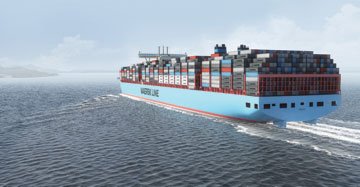
Global shipping giant Maersk is warning of renewed volatility across global supply chains in 2026 as container lines weigh a gradual return to the Red Sea, while governments introduce new trade and customs measures that could reshape cargo flows.
In its winter 2026 Global Market Update, Maersk said a full transition back to trans-Suez shipping remains in the planning phase and is contingent on sustained safety in the region, despite one of its services successfully transiting the area in December 2025.
“There is no doubt that there will be added volatility to supply chains once container liners begin the shift back to East-West transits through the Red Sea,” said Johan Sigsgaard, chief product officer for ocean at Maersk. “While this shift can be planned to a certain extent, changes of this size introduce considerable disruption to the networks, and the scale of the impact will depend on how fast the transition will happen.”
Maersk said a staggered overlap of vessels returning via the Suez Canal and those still routing around the Cape of Good Hope could result in a surge of inventory into Europe, increasing the risk of overstocking. Euro area inventories are already above early 2020 levels and higher than average relative to demand, the company said.
European ports may also face pressure. Data cited by Maersk shows major ports such as Rotterdam, Hamburg and Algeciras operating near 80 per cent utilization in mid-2025, leaving limited buffer for a sudden influx of vessels.
“Tying up capital in high inventories has historically proven challenging for businesses during supply chain shifts,” said Karsten Kildahl, chief commercial officer at Maersk. “Considering that flexibility is currently constrained from high utilisation in European terminals and coupled with the generally high levels of inventories in Europe, a sharp focus on avoiding unintended build-up of inventory will be a priority for many customers ahead of a full trans-Suez return.”
The company said its Gemini ocean network and ownership of vessels and terminals provide operational flexibility to respond more quickly to disruptions, though it cautioned that knock-on effects could be felt globally, including container shortages in export-dependent markets.
On the policy front, Maersk highlighted the European Union’s decision to eliminate its de minimis exemption for low-value imports beginning July 1, introducing a three-euro charge per item type on parcels previously exempt from duties.
“What we observed in the U.S. after the de minimis exemption was removed back in the summer was more e-commerce companies storing inventory in North America to get closer to the end consumer and avoid tariffs,” said Lars Karlsson, Maersk’s global head of trade and customs consulting. “We expect more of the same to happen in Europe in the build-up to the new 3 EUR charge being implemented in July, which will of course cause ripple effects on inventory levels and indeed trade flows.”
Maersk also pointed to upcoming reviews of major trade agreements in 2026, including the framework governing trade between the United States, Mexico and Canada, as well as new tariffs imposed by Mexico on more than 1,000 products from multiple countries.
In Canada, Maersk noted that two steel-related measures took effect on Dec. 26, 2025. A new 25 per cent surtax now applies to certain steel derivative goods imported for commercial use, with limited exemptions for goods in transit or imported before July 1 for specific end-uses. In addition, some steel products remain subject to a 50 per cent surtax when imports exceed tariff-rate quota thresholds, with shipment-specific permits required to access quotas.
Maersk said it will continue monitoring developments and advising customers on customs and trade compliance strategies throughout 2026.




Leave a Reply