U.S. container imports rebound in March amid geopolitical, trade uncertainty
Share

Share
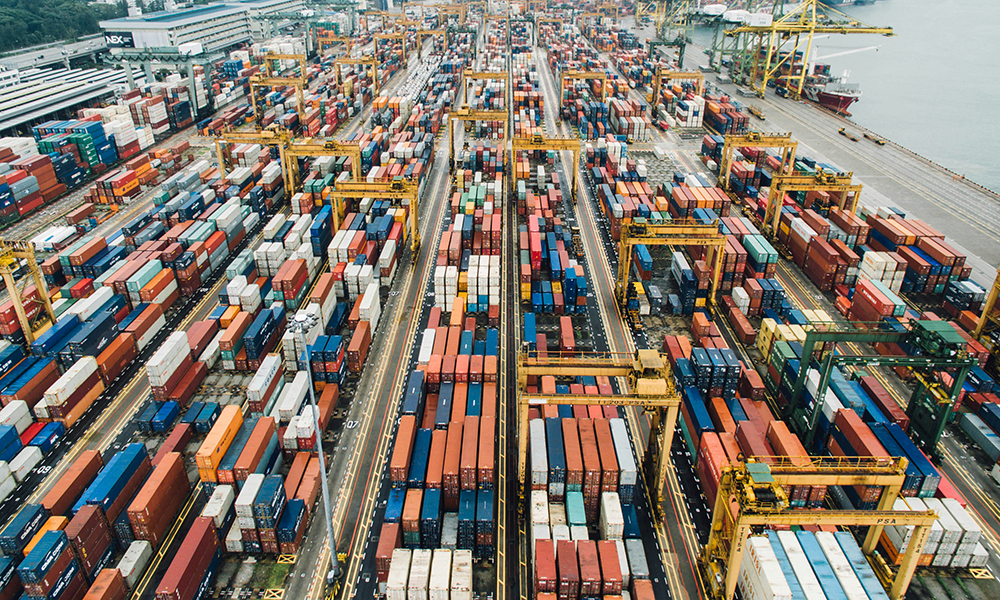
U.S. container import volumes rebounded in March, rising 12.4 per cent from February, even as geopolitical tensions and shifting trade policies continue to weigh on global supply chains, according to the latest report from Descartes Systems Group.
The company’s April Global Shipping Report found imports reached 2,353,611 twenty-foot equivalent units, marking the fourth-highest March on record. Volumes were down slightly, by 1.1 per cent, compared to March 2025 but remained 32.3 per cent above pre-pandemic levels in March 2019.
Year-to-date, U.S. imports are trailing 2025 levels by 4.8 per cent.
Imports from the Top 10 countries of origin rose 8.2 per cent month-over-month, with Italy, Thailand and South Korea posting the largest gains. China was the only major sourcing country to record a notable decline, falling 2.3 per cent from February and 6.7 per cent year-over-year.
The report also noted a shift in port activity, with East and Gulf Coast ports surpassing West Coast ports in market share for the first time since May 2025. Port transit delays remained stable overall.
Global shipping conditions, however, are being strained by rising geopolitical risks. Tensions in the Middle East have disrupted key maritime corridors, including restrictions in the Strait of Hormuz and increasing threats to the Bab al-Mandeb Strait. Ongoing uncertainty around U.S. tariff policy and trade negotiations with the European Union, India and China is also contributing to volatility.
“While March import volumes remain near historically high levels and port operations continue to perform efficiently, escalating tensions in the Middle East, evolving U.S. tariff policy and shifting global trade dynamics are increasing volatility around routing, costs and sourcing decisions,” said Jackson Wood, director of industry strategy at Descartes. “To minimize global shipping challenges, importers are responding by diversifying sourcing beyond traditional trade lanes, recalibrating routing strategies in response to geopolitical risk, and leveraging data and technology to make faster, more informed decisions in an increasingly complex trade environment.”


Leave a Reply