Warehouse operations need strategic planning to handle compounding disruptions
Share

Share
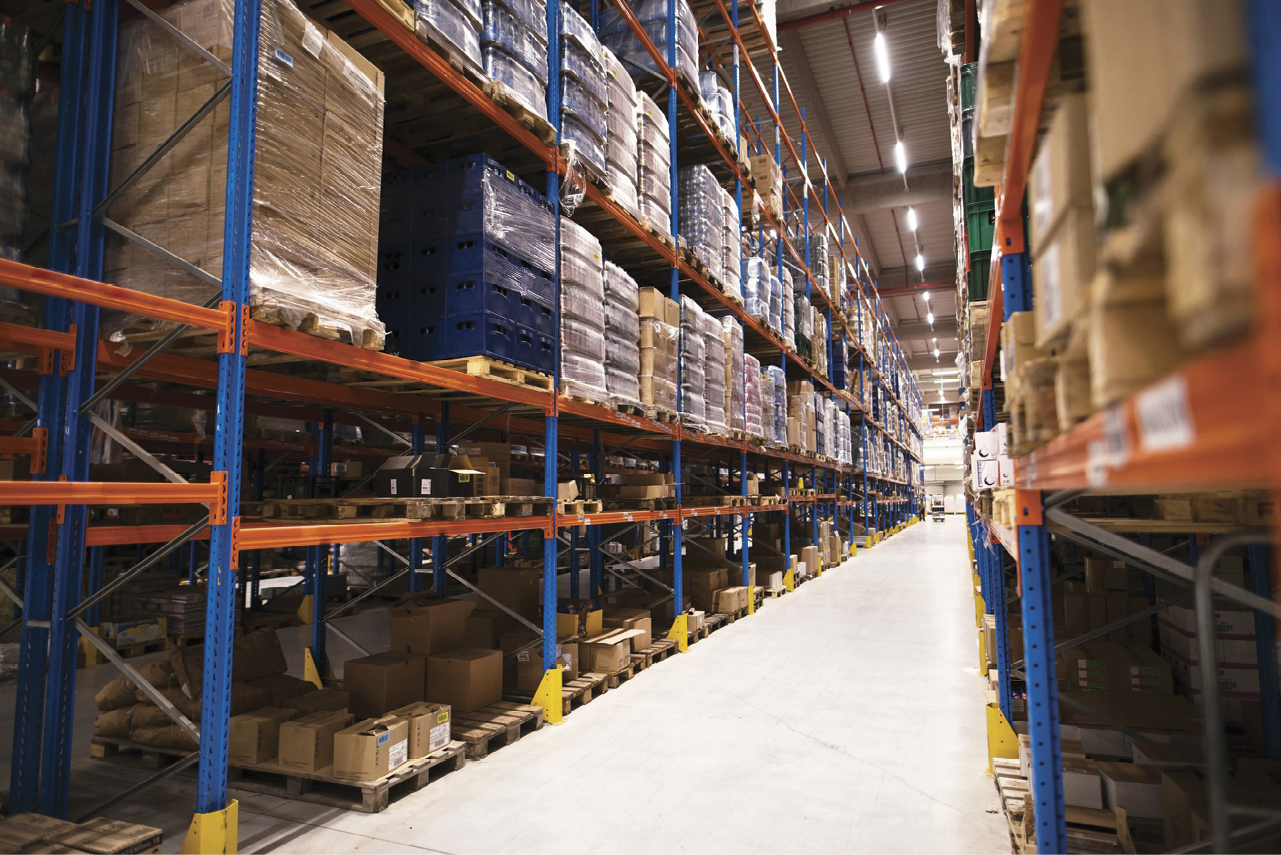
Disruption in warehouses used to be more isolated events that were easier to predict and mitigate. Today, these challenges are becoming more frequent, complex and difficult to plan for or resolve.
Luther Webb is the vice-president of data science at Trew, a material handling automation solutions company. With more than 40 years of experience in warehouse operations, he remembers a time when disruptions such as weather and geopolitical events were fairly easy to predict, and companies knew how they would respond.
“In the present day, those uncertainties have become more frequent. They have become more unmeasurable, less predictable and more complex,” he said during a presentation at the Council of Supply Chain Management Professionals Edge conference in Maryland this past October. “In the future, these are not going to go away. What’s going to happen is instead of being linear, these disruptions, these problems that are going to affect our warehouses, will come in a more compound manner. They’re going to start stacking up on top of each other.”
To help overcome these compounding challenges, Webb said warehouse operations need to become more resilient. To achieve this, there must be a deliberately designed plan that follows a set of foundational principles, enabling warehouses to adapt to disruptions while continuing to maintain operations and cost efficiency.
“Adaptability just doesn’t happen. It has to be something that you plan for. It has to be strategic,” said Webb. “You have to have a playbook that you can go to, that operators are going to go to, so that they know how to react when certain things happen.”
To turn a warehouse’s resilience into a competitive advantage, Webb said there needs to be operational balance.
“You can’t simply flex your operation and then wait later to see what the costs are for what you chose to do,” he said. “We want to be able to flex against a disruption and still maintain our cost per piece. If we can’t do that, then we’re no longer competitive.”

Another area that needs to be flexible is infrastructure. That means not simply buying into every piece of technology or automation, but rather finding the best fit for your particular business.
Scalability is also important. As Webb explained, scalability is not just about long-term capacity expansion; it’s about the ability to adapt to changing order profiles and velocities throughout each day of an operation.
“The way I think of those catalysts is you’re looking for things that can scale. And I’m not talking necessarily about scale five years out for growth. Yes, you need to consider that, but I want you also thinking about scale every day, every hour of your operation,” he said. “So what happens when your order profile changes or your order velocity changes midday? How do you scale in order to achieve the throughput that you need for that day?”
Webb also pointed to labour dependency, particularly how it can create variation and vulnerability within a warehouse operation. This is where strategic automation investments should focus—on reducing dependency to enable more consistent performance during a disruption.
“I think when we look at a catalyst, what it has to do is it has to reduce the dependencies, because dependencies are when we begin to introduce variation, and we can’t absorb that variation very efficiently. So one of those dependencies is obviously labour,” he said. “Wherever we can absorb labour and reduce our dependency on labour, that again will give us some catalyst for resilience. Labour fragility is not going to go away. Our labour is going to continue to be a problem, and we’re going to have to continue to invest in those solutions that will reduce our labour dependency.”
Autonomous robotics is another area that should be evaluated to ensure flexibility during periods of disruption.
Navigation technology, for example, can have an impact on a system’s ability to adapt to disruptions and changes in workflow.
“The intention there is that autonomous vehicles can change workflows without major infrastructure changes. In other words, if you had a robot with LIDAR and you put something in its way on its normal path, it can go around that to continue on its path,” said Webb. “Well, not all robots at all times in all warehouses are guided by LIDAR. For example, some of them are guided by fiducials, so they’re kind of stuck on that path, similar like it would be with a conveyor.”
Goods-to-person systems are also important when creating a resilient warehouse operation, as they address three key mechanisms: labour reduction, built-in recovery capacity through excess throughput capability, and strategic SKU distribution.
“You have to make sure that if an aisle goes down—we’ll say in an ASRS solution—how do I get around that? Are the SKUs spread out in that ASRS system where I can continue to complete my orders while I’m trying to get that aisle back up?” said Webb. “If not, that should be a way that you measure it. It’s not as flexible as you need.”
There is also a need to balance space utilization with speed and accessibility requirements.
“You have to compare again what your needs are, because if I have a more dense solution, a lot of times what you’ll find is the complexity that is required to retrieve a SKU, for example, is more complex,” said Webb. “It takes more time and my cycle time is not as high. Whereas if I have a solution that is less dense, I have maybe 100 per cent availability of all SKUs to all robots. So again, you have to measure each one of these solutions against what flexibility means for all of your potential disruptions.”
Finally, customer needs and ever-changing expectations cannot be ignored. When designing a resilient warehouse, operators should focus on this fundamental truth that never changes.
“Customers will never want a more expensive product. Customers will never want their orders to take longer. They always want the orders to be there quicker, sooner, cheaper,” said Webb. “Those are things that are true. Those are the things that we need to do when we evaluate our warehouse for resilience—what are those things that we need to be consistent on? And then we have to look at how automated solutions are going to allow us to continue to be consistent on those metrics?”






Leave a Reply