Container rates stabilize despite ongoing Middle East conflict
Share

Share
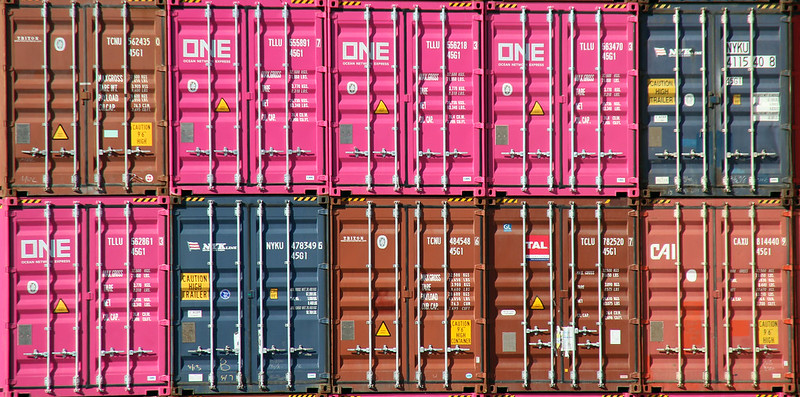
The Drewry World Container Index (WCI) remained stable at US$2,287 per 40-ft container for the week of March 30 to April 3, with rates holding steady on the Asia–Europe and Transpacific trade routes.
Rates on Asia–Europe trades have remained relatively stable despite ongoing tensions in the Middle East. Spot rates on Shanghai–Genoa inched up two per cent to US$3,529 per 40-ft container, while Shanghai–Rotterdam stayed unchanged at US$2,543. According to Drewry’s Container Capacity Insight, only four blank sailings have been announced for next week on the Asia–Europe trade, suggesting stable capacity. Meanwhile, Drewry expects spot rates to increase in the coming weeks as higher bunker fuel costs prompt carriers to implement emergency bunker fuel surcharges.
On the Transpacific route, spot rates from Shanghai to New York increased one per cent to US$3,434 per 40-ft container, while those to Los Angeles dropped one per cent to US$2,663.
Maersk is seeking U.S. regulatory approval to waive the 30-day notice period and introduce an emergency bunker surcharge, citing elevated and volatile fuel costs amid Middle East tensions. The proposed surcharge is US$200 per teu for head-haul and US$100 per teu for backhaul dry shipments. With carriers continuing to push for rate increases, Drewry expects spot rates to increase further in the coming weeks.
Ongoing disruptions in the Strait of Hormuz, a key route for nearly 20 per cent of global oil, have tightened bunker fuel availability and pushed prices higher. In Asia, fuel supplies in key hubs like Singapore and China are starting to tighten, prompting carriers to adopt operational measures such as slow steaming, alternative refuelling strategies and emergency fuel surcharges to manage costs. These measures are expected to keep freight rates elevated in the short term.
Leave a Reply