Middle East conflict and weak demand impact container rates
Share

Share
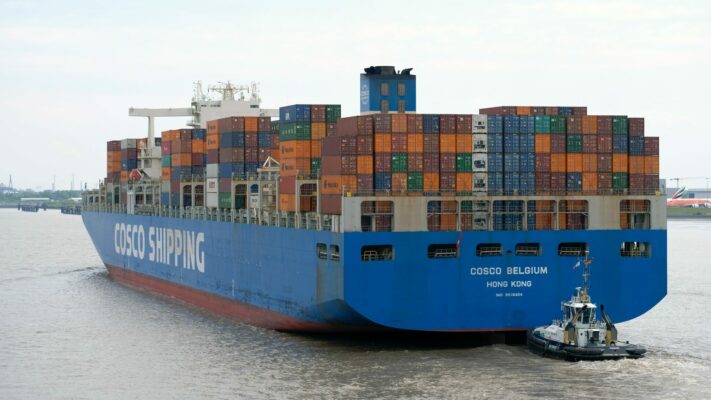
The Drewry World Container Index (WCI) slipped for the second consecutive week, down one per cent to US$2,232 per 40-ft container for the week of April 20-24, driven by lower rates on the Asia–Europe trade route.
Despite higher fuel costs and war-risk surcharges due to ongoing disruptions in the Strait of Hormuz, Drewry said carriers are struggling to sustain rate increases amid weak demand.
Spot rates on the Transatlantic trade route increased in double digits this week. Although rates on this lane are typically stable, they have been rising since the end of March. Freight rates on the Transatlantic route increased 15 per cent to US$2,326 per 40-ft container, driven by capacity reductions and the implementation of US$1,100 per 40-ft container PSS by carriers, effective April 15.
Spot rates on the Asia–Europe trade route declined this week despite ongoing tensions in the Middle East, driven by weak seasonal demand and excess capacity. Rates from Shanghai to Genoa fell eight per cent to US$3,071 per 40-ft container, while rates to Rotterdam decreased four per cent to US$2,147. According to Drewry’s Container Capacity Insight, carriers have announced only three blank sailings for next week on the Asia–Europe trade route, indicating not much reduction in effective capacity.
In contrast, Transpacific rates rose this week, driven by carrier capacity reductions to counter seasonal demand softness. According to Drewry’s Container Capacity Insight, nine blank sailings have been announced for next week to manage higher capacity. Rates from Shanghai to Los Angeles rose four per cent to US$2,934 per 40-ft container, while rates from Shanghai to New York remained stable at US$3,562. Drewry expects freight rates to remain relatively less volatile in the next week.
Ongoing tensions in the Middle East continue to disrupt operations around the Strait of Hormuz, resulting in constrained conditions and limited vessel movement in the region. Although bunker fuel prices remain elevated compared to pre-conflict levels, they have eased from recent highs. As a result, fuel-related cost pressures persist but are not sufficient to offset the broader downward pressure on freight rates driven by weak demand.




Leave a Reply