Manage noise exposure with an effective hearing loss prevention program
Share

Share

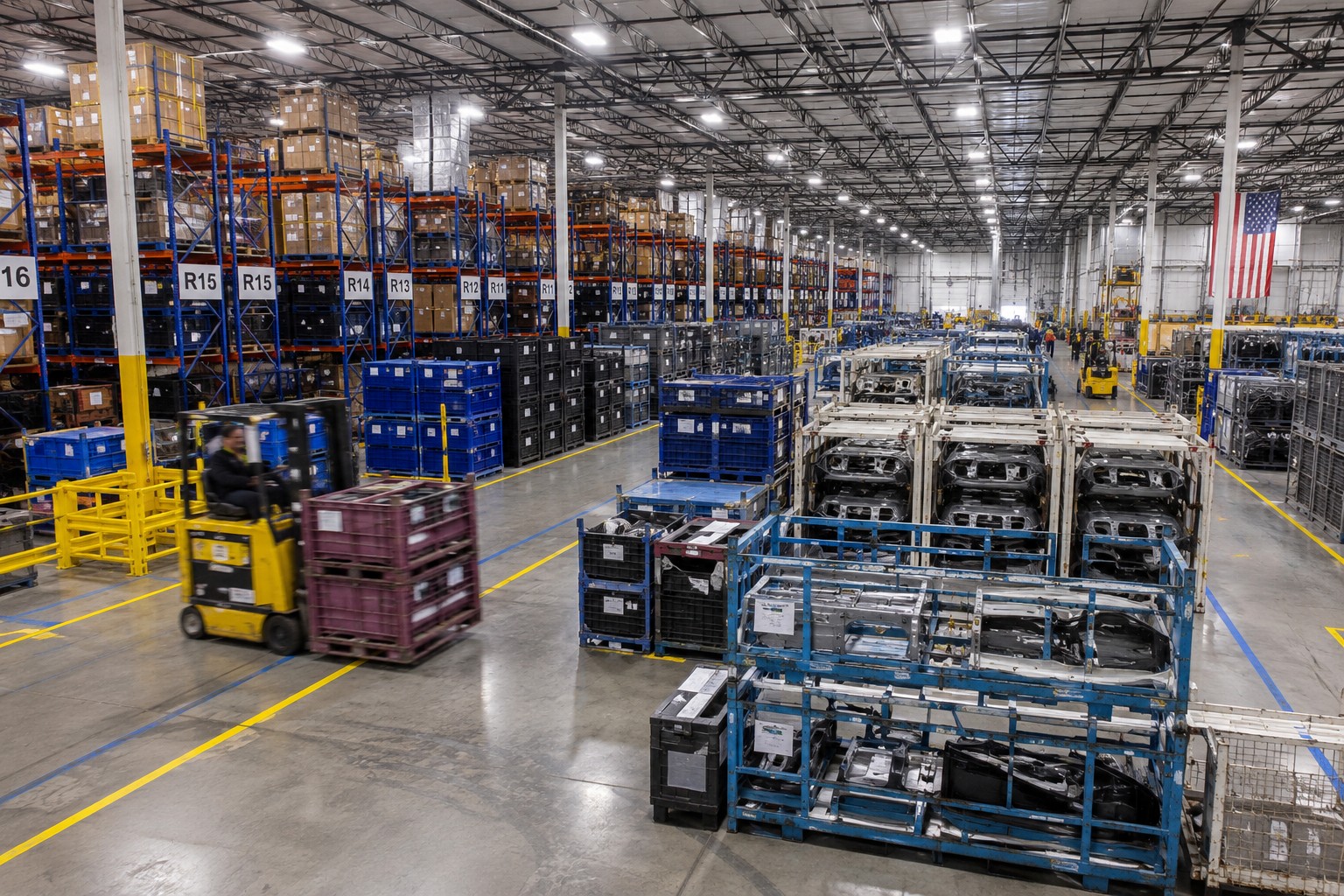
 With the constant movement of people, products, vehicles and equipment, warehouses and distribution centres are noisy places. Forklifts, conveyors, palletizers and alarms all contribute to a loud work environment.
Despite this, many do not think about noise as a hazard, even as hearing-loss claims continue to rise. According to the Workplace Safety and Insurance Board, there were 8,835 claims for noise-induced hearing loss in 2023, compared to 7,429 in 2022, representing 37 per cent of all claims and 29 per cent of claim costs.
Noise may contribute to other types of injuries as well. It can mask warning signals from mobile equipment and make it difficult to hear verbal instructions, both of which may lead to near misses or incidents. From a psychological safety perspective, chronic noise exposure can reduce concentration and increase stress. This not only leads to dissatisfied workers but can also result in slower reaction times and more errors.
Start with the noise assessment
Comparing the noise levels in your workplace to regulatory thresholds will help identify problem areas and form the basis of a hearing-loss prevention program.
Consider applying engineering controls to reduce noise to safe levels. For example, explore the feasibility of sound-absorbing materials, barriers and equipment enclosures. Regular maintenance of machinery also helps prevent unnecessary noise from worn parts.
Administrative controls can be effective as well. In addition to training workers to recognize noise hazards, understand their long-term impact and mitigate risk, employers can implement job rotation, where possible, to limit individual exposure. Noisy tasks can also be scheduled during less populated shifts, reducing the number of people exposed.
Although there are effective engineering and administrative controls to reduce noise exposure, hearing protection will likely still be a component of a hearing-loss prevention program. Employers should remember that hearing protection is not a one-size-fits-all approach.
Workers have different head sizes and ear canal shapes, so they must be fit-tested to ensure the devices they use provide adequate protection. Providing hearing protection fit testing is a best practice that strengthens any hearing-loss prevention program.
What other best practices should your program include to prevent noise-induced hearing loss in your workplace? Here are eight recommendations:
1. Determine if you have a noise problem. Some indicators include:
▶difficulty communicating without raising your voice
▶equipment producing sound levels above 80 dBA
▶complaints about noise or ineffective hearing protection
▶WSIB claims for noise-induced hearing loss
2. Measure noise levels in your workplace. Rent a calibrated sound level meter or hire an expert to assess levels. Use the meter to take spot measurements and identify the loudest tasks or equipment. While apps are available, their accuracy can vary by as much as 10 decibels, so they should only be used as an initial screening tool.
3. Measure workers’ exposure using personal dosimeters. Worn throughout a shift, dosimeters provide a more accurate picture of exposure. If exposures exceed 80 dBA, control measures should be implemented. Although the legal limit in Ontario is 85 dBA over eight hours, best practice is to reduce exposure to 80 dBA.
4. Conduct audiometric testing on new employees to establish a baseline. Repeat testing every one or two years to determine whether hearing loss has occurred.
5. Implement control measures. Engineering controls are the most effective way to lower sound levels. Examples include:
▶purchasing quieter equipment where possible
▶maintaining equipment that may be the source of noise
▶enclosing the noise source or the worker
▶modifying or retrofitting noisy equipment (e.g., installing mufflers on air exhausts)
▶adding dampeners to air guns
▶using screens and shields to block noise
6. Use hearing protection as a last resort. Compare noise assessment results to the reduction ratings of available hearing protection. Ensure the selected protection reduces exposure below legislative or best-practice levels.
7. Provide training to all workers. Explain the purpose and elements of the hearing-loss prevention program and how they work together. If workers wear hearing protection, train them on device limitations, proper fit, and how to inspect, maintain, clean and disinfect equipment.
8. Ensure controls are working. Conduct periodic noise assessments, especially if workplace conditions change, to confirm that engineering controls remain effective.
Visit WSPS.ca for more information on managing noise in the workplace.




Leave a Reply