Canada can’t wait for the world to change
Share

Share
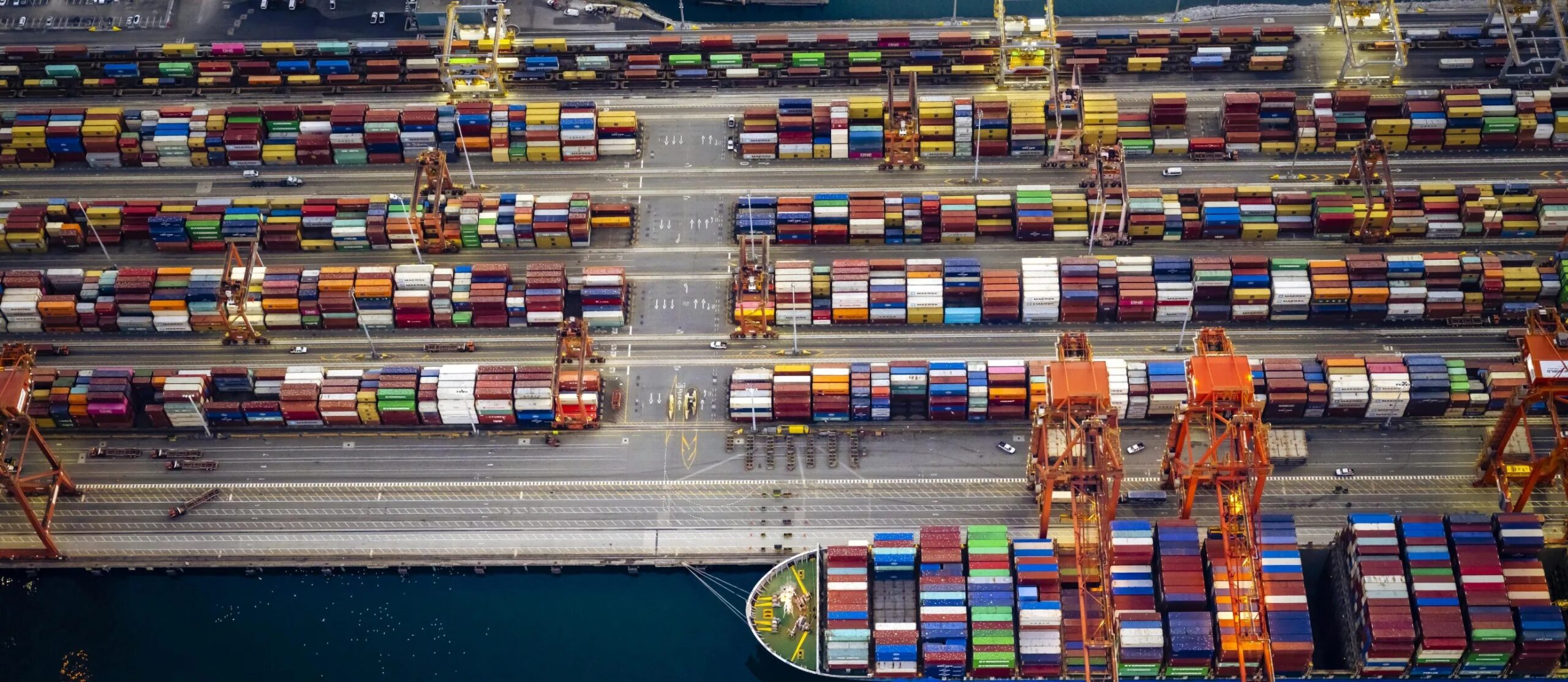
From global conflicts and a worldwide pandemic to constantly changing trade policies, the Canadian supply chain is no stranger to disruption, and if it is going to thrive over the coming years, it cannot wait for the world to change.
That was the sentiment of ATB Financial vice-president and chief economist Mark Parsons during his economic update at CITT’s annual conference in Calgary this past June.
Speaking in Canada’s energy capital, Parsons pointed to several factors impacting global supply chains, including the situation in Iran that has resulted in the Strait of Hormuz being effectively blocked and causing oil prices to spike.
Originally a skeptic that such a blockage would ever occur, Parsons argued it was a positive for Alberta and Canada as major energy producers, despite the fact many companies remain cautious with capital spending as they wait for more certainty when it comes to energy prices and policy.
Parsons also flagged three underappreciated competitive pressures on Canada’s oil market: the possibility of increased production in Venezuela from one million to three million barrels a day; the United Arab Emirates signalling its intent to leave OPEC and boost oil output to five million barrels a day; and Canada’s tariff-reduction deal with China.
“Canadian producers saw their exports to China go to effectively zero under tariffs. Now that tariffs have been lifted, you’re starting to see exports go up,” said Parsons.
With regard to tariffs between Canada and the U.S., Parsons said the actual damage to Canada from U.S. tariffs is much smaller than initially feared.
“When 2025 started, we talked about maybe a 25 or 35 per cent broad-based tariff on Canada, and now the effective tariff rate on Canada is somewhere around six or seven per cent,” he said, adding that he expects more sector-specific tariffs, not the broader implementation originally expected.
Offsetting the tariffs, according to Parsons, is investment in artificial intelligence, which he said has been quietly propping up growth throughout the trade turmoil.
“We forgot about this thing called AI that’s operating in the background,” he said. “The build-up of U.S. data centers is driving U.S. growth. It’s creating this wealth effect, and people are spending the wealth. It’s AI that’s countering the weight of tariffs.”

Parsons also pushed back on the idea that “everything was fine before U.S. President Donald Trump’s second term.”
“Everyone’s like, ‘everything was great before Trump, and then Trump came and spoiled the party,’” he said. “Really, is that the story? We were talking about stuff like GDP per capita or productivity way before Donald Trump. It’s been a long-standing issue.”
One of the main solutions Parsons said would help the Canadian economy is to double non-U.S. exports and build more export infrastructure, particularly for energy.
“We need to accelerate major projects. We need to go further than that and [do it] for everyone. We’re not in a position to be choosy,” he said. “We built the TMX [Trans Mountain] expansion and exports to Asia went from zero to $9 billion. We built the [Prince Rupert] propane export terminal and about $2 billion a year in exports went to South Korea, Japan and China. We built LNG Canada and our exports to Asia have surged.”
Labour market
In Canada, Parsons said job growth has varied significantly by region.
“In Alberta, it’s a strong year for job growth. Quebec, Ontario, B.C. — not so much,” he said. “The manufacturing-based provinces that are being hit by trade uncertainty and tariffs are the ones whose labour markets are underperforming right now.”
He also pointed out that Canada’s population is actually declining.
“Let that sink in — the population in Canada is declining. When has that happened? Well, pretty much never,” he said, showing a chart of Canada’s population growth. “This chart goes all the way back to 1953 and the population has never declined.”
Alberta’s migration story has also changed. Once a province people relocated to primarily for employment, it is now driven more by affordability.
“The story in Alberta used to be the energy sector booms, unemployment rate goes down, wages go up, people move to Alberta,” he said. “Not the story anymore. People aren’t choosing [Alberta for] wages. They are looking for less expensive places to live.”
The affordability factor has become the biggest concern for Canadians, despite the conversation around tariffs and trade.
“Donald Trump likes to finish first, but he’s third — it’s the third thing that people are worried about,” said Parsons. “The cost of living is what’s on people’s mind.”
Parsons closed by saying Canada holds the cards in what he described as a resource-hungry world.
In addition to energy production, Parsons said Canada has opportunities in food and critical minerals.
“The good news is this: we have everything the world wants,” he said. “Canada should put on its running shoes right now by recognizing the ball is in our court. Are we waiting for the world to change? We could. But it’s not going to change.”





Leave a Reply