Warehouses face growing pressure to tighten security as threats evolve
Share

Share
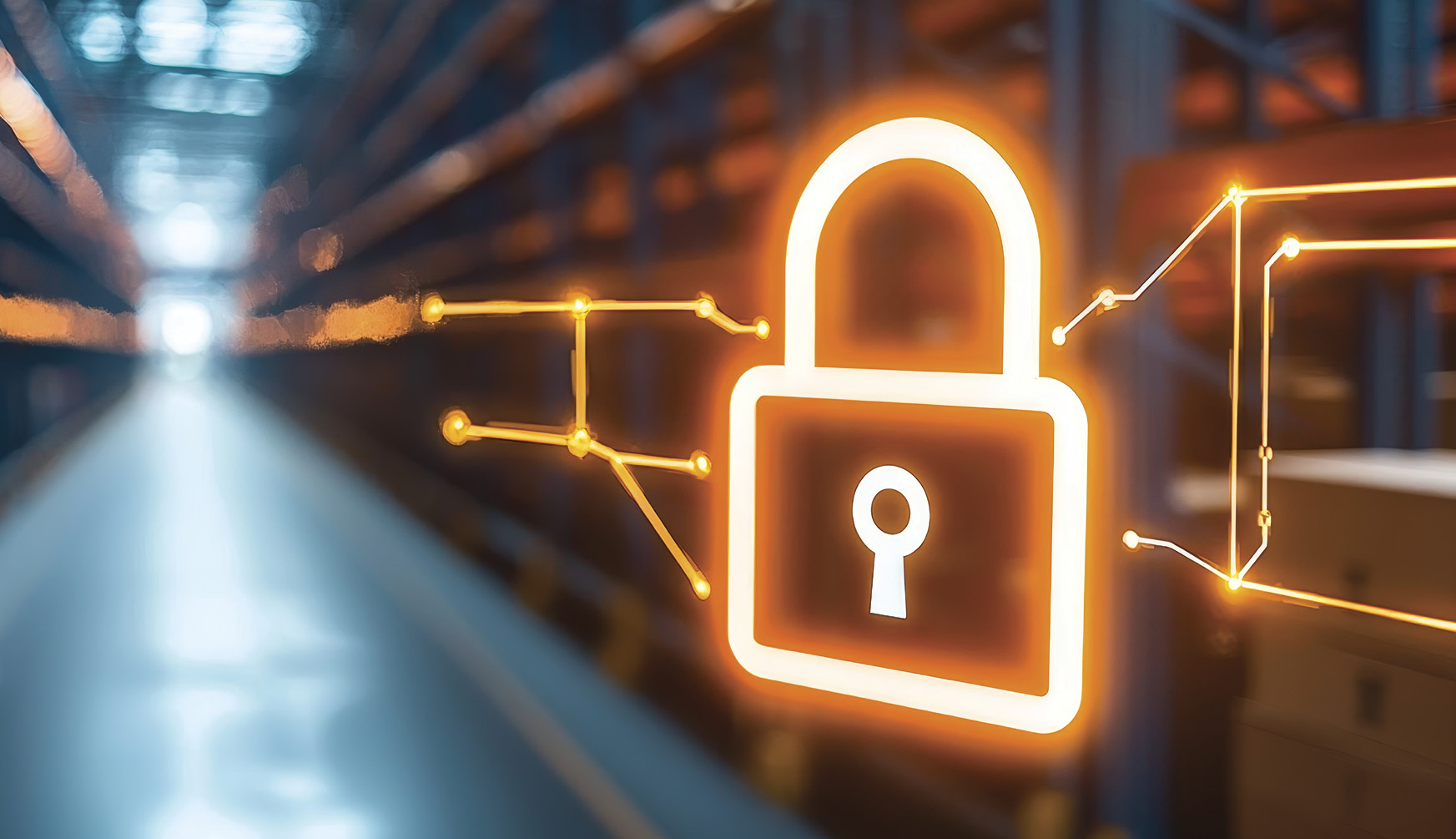
In a world becoming more complex with continued advancements in technology and artificial intelligence, warehouse environments must remain vigilant when it comes to security.
As cybersecurity and cargo theft threats become increasingly sophisticated, warehouses are transforming their approach to address evolving core security challenges in today’s environment.
Many experts agree that the central challenge when it comes to security is not simply that more threats exist, but rather that there is a lack of unified, real-time visibility across warehouse operations.
Adam Lowenstein, product director with i-PRO Americas, which provides security camera systems to warehouses and distribution centres, says many warehouses today struggle to maintain awareness across multiple zones without constant human monitoring.
“The bigger issue is visibility,” said Lowenstein. “Large logistics environments need a clear, real-time understanding of what is happening across loading bays, yards, entry points and high-value areas without relying on someone to watch screens all day.”
Lowenstein says technology is evolving, with AI-enabled cameras able to detect people, vehicles and custom objects.
“Warehouses and distribution centres can identify real events, such as intrusion or loitering, while filtering out noise from weather, lighting changes or irrelevant motion,” he said. “The result is fewer false alarms and faster, more focused response.”
Zebedeo Pena, strategic account manager at security solutions provider Genetec, agrees, saying warehouse operators lack resources to monitor all areas in real time, resulting in investigations having to reconstruct what happened.
“Technology is helping by connecting different types of data so teams can answer those questions faster. Video, access control, intrusion detection, ALPR, analytics and sensors such as LiDAR can help reconstruct events and show how people, vehicles and goods moved through the facility,” said Pena. “For many operators, the priority is not watching everything live, it’s being able to quickly investigate issues, understand where a process broke down and keep operations moving.”
Charlie Forsyth, director of enterprise resilience solutions at Motorola Solutions, says that with security systems often generating too much disconnected data, there is a need to move from passive monitoring to active response.
“The big trend is to move beyond detection and automate a coordinated, local response to intervene, preventing incidents before they occur and limiting their impact.”
– Charlie Forsyth, director of enterprise resilience solutions at Motorola Solutions
“Warehouse operators can see exactly where an alarm is triggered and alert or dispatch local responders via radios or smartphones, saving valuable time and creating a more coordinated response,” said Forsyth.
AI is also helping shift security from monitoring to detection and action, turning massive data streams into actionable alerts and faster decision-making.
“Video analytics are helping facilities better detect anomalies like loitering, weapons or an unauthorized person or vehicle,” said Forsyth.
Lowenstein says integrated systems help improve overall security by combining video surveillance, access control and analytics.
“Standalone tools tend to capture isolated events, while integrated platforms connect them in more meaningful ways for operators,” he said. “When video, access control and licence plate recognition are unified in a video monitoring system, operators can see what happened and how it relates to a vehicle, credential, gate transaction or workflow. That reduces investigation time and improves decision-making in real time.”
Security systems are increasingly converging into operational intelligence tools, revealing breakdowns in logistics flows and providing yard and inventory tracking.
“This helps reduce manual yard checks, speeds up investigations, supports after-hours access and improves truck flow,” said Pena. “It also helps identify patterns that are hard to see at a single site. If incidents occur across several facilities, operators can look for common drivers, vehicles, access events or containers connected to those events, helping them identify patterns that would otherwise remain hidden.”
Worker safety is another benefit of warehouse security infrastructure.
Cameras can detect falls, unsafe behaviour and personal protective equipment compliance.
“Through AI-enabled technologies with advanced video analytics, security operators or managers can spot potential hazards such as a floor spill before they escalate into serious accidents,” said Forsyth. “Smart sensors can alert to signs of distress like key words such as ‘help’ or ‘emergency’ and automatically alert security teams, helping to create an environment where worker safety and asset protection go hand in hand.”
Response to an incident, whether a safety or security issue, is becoming more automated and coordinated.
“When a critical incident happens, whether it’s a slip and fall or an active shooter, every second matters, and in a large environment like a warehouse, unified dispatch tools are critical,” said Forsyth. “Whether someone is using a two-way radio on the warehouse floor or a smartphone off-site, coordinated communication platforms help different teams stay on the same page.”
“This seamless flow of information provides situational awareness and localized intelligence, which helps teams know where to act and speeds up their response.”
As AI continues to improve, the shift will be toward predictive, agentic and proactive security measures.
“AI, analytics and automation are becoming more important because it is not realistic to have people watching every camera all the time,” said Pena. “Large logistics environments can have thousands of cameras across many sites. Analytics can help flag activity that needs attention, such as after-hours movement, entry into restricted areas, activity near perimeter points or unusual behaviour around loading docks and staging areas.”
“GenAI adds another layer by allowing security teams to interact with the system using natural language prompts,” adds Lowenstein, “giving them more flexibility when searching for people, vehicles, objects or incidents.”
Enterprise-wide risk reshapes cybersecurity thinking
“Cybersecurity is no longer viewed as solely an IT problem. Organizations are recognizing that it is an organizational risk.”
That was the sentiment of Becky Ross, vice-president of IT for DHL Supply Chain, during a panel discussion at the Gartner Supply Chain Symposium/Xpo in Orlando this past May.
Ross went on to say that the recognition is not focused solely on one’s own organization, but on anyone with a digital touchpoint.
Threats are also coming from all directions and from several sources.
“Does anybody remember when cybersecurity training used to be, ‘If you get an email that obviously looks like phishing, don’t click the link?’ That’s what we used to train on,” said Ross. “Now, these threat actors are so sophisticated. They have resources, there are large numbers of them and they’re coming at us from every angle. We need to make sure we have the right practices in place to help protect against that.”
Joining Ross on the panel was Jennifer Miller, vice-president of transportation for DHL Supply Chain, and on the operational side, Miller says there are a tremendous number of bad actors who attack every part of her company’s IT and operational processes.
“They’re attacking [motor carrier] MC numbers. They’re buying legitimate MC numbers, rebranding them and then using those legitimate identities to steal freight,” she said. “They’re hitting us with emails and every type of scheme imaginable to find a crack in our process or infrastructure.
“It’s incredibly important that we address every piece of it. It starts from the first touchpoint with a customer and carrier and goes all the way to a truck physically arriving at a facility.”
Miller adds that the threat does not stop at her company.
“These bad actors will infiltrate one of our partners’ or carriers’ email systems, and they’ll wait. They’ll watch until they get the information they want, and then they’ll physically attack and steal,” she said. “That means our protocols have to be spot on every single time. This is no longer a full-frontal assault. It’s behind the scenes, it’s subtle and we have to constantly watch for it.”
To help build resilience across transportation partners, IT and operations, Miller compared the effort to a warehouse’s “safety first” approach.
“It’s the same thing in transportation and virtual operations. It has to be ‘security first,’” she said. “The only way to scale is by building a culture inside the organization where people understand they must follow the process every single time without fail. Culture is everything. Sometimes that means holding people accountable when they step outside the process. But accountability drives culture.”
Ross agreed, adding that cybersecurity is not a “me” or “you” problem but a “we” problem.
“The weakest link can cause the breach, so we have to work together to create resilience at scale,” said Ross. “That starts with common standards across corporations and digital partners. We also need real-time visibility – not just dashboards, but systems actively monitoring what’s happening now.”
Embedding cybersecurity across large and complex environments means treating it as a core capability.
“Security is part of onboarding every new technology and process from day one,” said Ross. “At DHL, cybersecurity training is mandatory when you start. But we also require ongoing training throughout the year. If employees don’t complete their training after multiple reminders, their email access is shut down until they finish it.”
Maintaining a modernized system and up-to-date hardware is another key to reducing risk.
Operationally, there is a multi-pronged approach.
“One of the key things we’ve done is onboard partners who help us vet carriers and identify threats across the industry,” said Miller. “The moment a carrier is breached or becomes suspicious, our systems alert us and shut that carrier down.”
It is also important to trust your gut and your staff.
“They’re listening for hesitation or signs something isn’t right. We’ve stopped many shipments because something felt off,” said Miller. “Technology and AI haven’t solved that human element, and I’m not sure it ever will. That human layer remains one of our strongest defences.”
Leave a Reply