Container rates up as global disruption continues
Share

Share
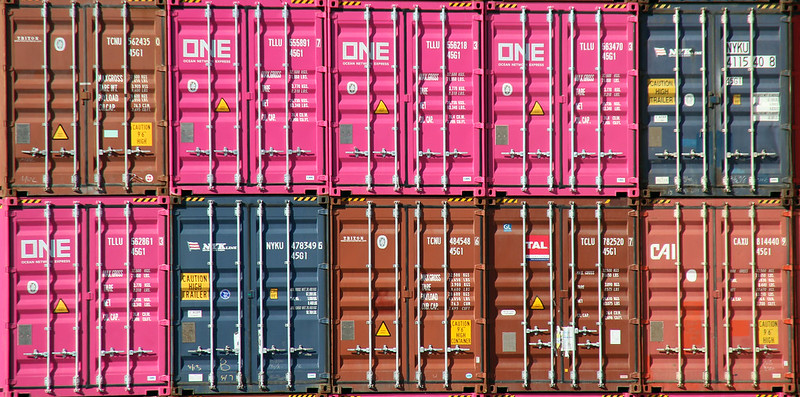
The Drewry World Container Index (WCI) increased four per cent to US$4,526 per 40-ft container for the week of Aug. 17-21 driven by higher rates on the Transpacific trade route.
Spot rates from Shanghai to New York and Los Angeles increased nine per cent to US$9,507 and US$6,802 per 40-ft container, respectively. Demand on the Transpacific trade remains resilient, while carriers continue to manage supply through blank sailings and capacity reductions. According to Drewry’s Container Capacity Insight, seven blank sailings have been announced for the next week. Additionally, capacity in August declined nine per cent month-over-month (MoM) on Asia to the U.S. East Coast and fell 0.4 per cent MoM on Asia to U.S. West Coast, further tightening space availability. Drewry expects freight rates to remain stable next week due to tightened capacity.
Additionally, several carriers have announced Panama Canal surcharges on Asia–U.S. East Coast and Asia–Gulf Coast trade routes effective September, which could add further pressure on rates.
On the Asia–Europe trade route, spot rates declined this week, with rates from Shanghai to Genoa falling two per cent to US$4,955 per 40-ft container and from Shanghai to Rotterdam decreasing one per cent to US$4,401. According to Drewry’s Container Capacity Insight, two blank sailings have been announced for next week, reflecting constrained capacity. In week 33, congestion at both Shanghai and Rotterdam has eased but remains elevated, with average vessel waiting times of 32.3 hours and 25 hours, respectively. Drewry expects freight rates to remain broadly stable next week.
The East-West container freight market remains uncertain amid ongoing geopolitical and operational challenges. While the U.S.-Iran memorandum of understanding on the Strait of Hormuz has expired without a lasting resolution, some carriers are gradually resuming selected Red Sea and Suez Canal transits following improved security assessments.
At the same time, port congestion across Asia and Europe, along with disruptions due to labour strikes at German ports, continues to impact schedule reliability. Carriers are supporting freight rates through capacity management and surcharge announcements, while shippers are advised to book early and allow additional lead time to mitigate the risk of cargo rollovers and transit delays.



Leave a Reply