How do you buy a 20-year asset for a 90-day contract?
Share

Share
Canada’s third-party logistics providers are being asked to commit in shorter and shorter windows. Contract cycles that once ran one or two years now routinely arrive as quarterly or six-month options, with renewal clauses that give the customer far more room than the operator. The same pressure is showing up inside private distribution centres, where volume forecasts are revised so often that the annual plan has become a rolling guess.
Recent Canadian supply chain reporting captures the gap well. Only about 45 per cent of organizations have meaningfully restructured procurement since the pandemic, and just 61 per cent say they feel equipped for the next disruption. Most operators know the ground has shifted. Fewer have changed how they buy the assets that sit on it.
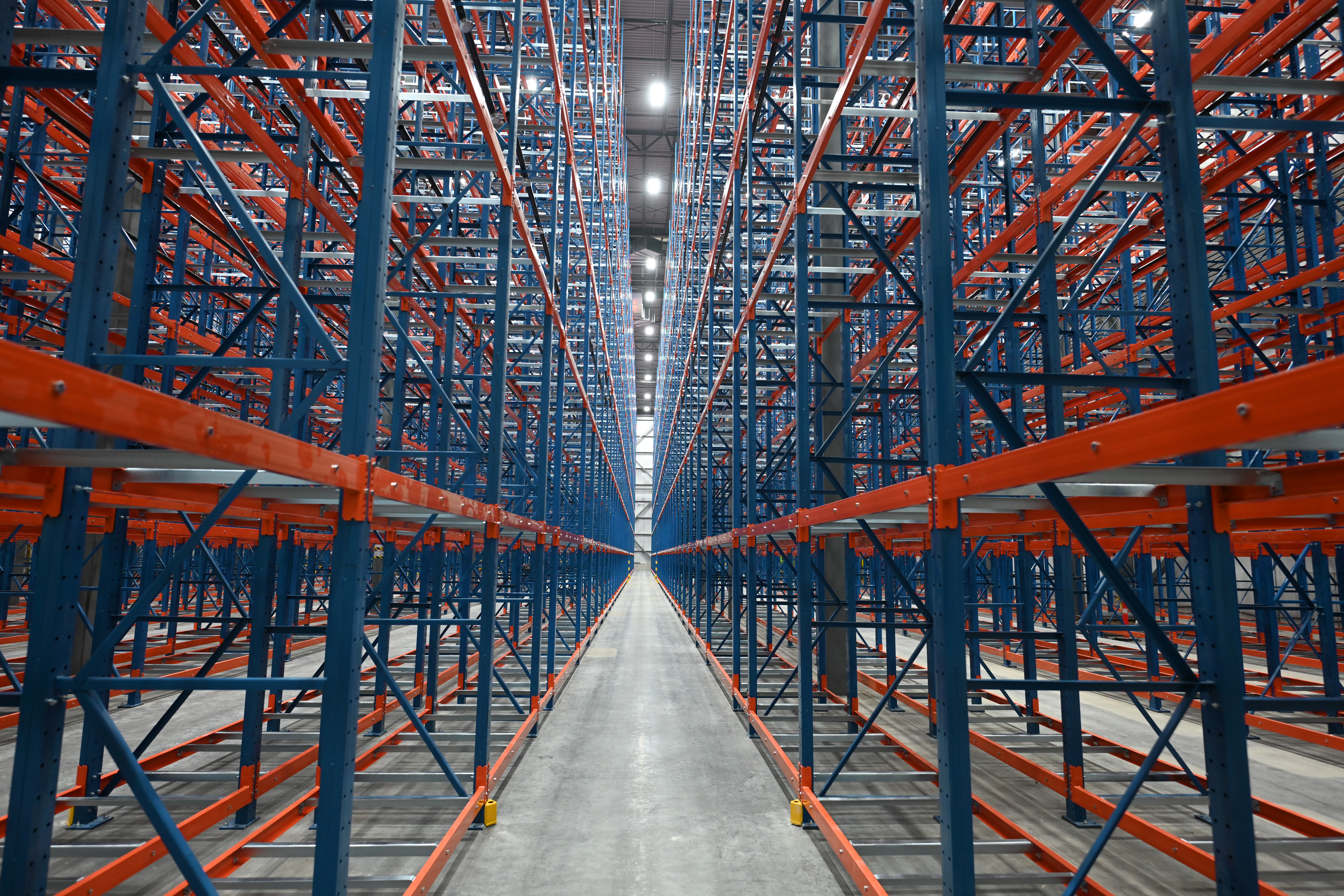
Racking is the clearest example. A pallet rack system is a 20-year asset installed in a fixed footprint, engineered to a specific load profile and anchored to a specific floor. It is being purchased, increasingly, to serve commitments measured in 90 days.
The cost of guessing in both directions
Operators tend to treat this as a budgeting problem, and it is not. It is a specification problem.
Guess high and the capital is real but invisible. Positions sit empty, floor space that could have held a staging lane or a value-added area is occupied by steel serving nobody and the aisle count is set for a throughput that never materialized. Nobody writes that loss down, so nobody manages it.
Guess low and the cost shows up all at once. A contract lands, the volume is real and the storage is not there. At that point, the options are all bad: turn the business away, rent overflow space at whatever the market is asking or buy rack on an emergency schedule, which almost always means paying for speed and accepting whatever configuration is available rather than the one that fits.
The instinct is to split the difference and build to the midpoint. That produces a system that is wrong for every scenario instead of wrong for one, and it does nothing about the underlying issue, which is that the operator does not know what the building will be storing in 18 months and cannot know.
Design for the range, not the forecast
The better approach is to stop specifying for the expected case and start specifying for the plausible range.
In practice, that means a handful of decisions made at the design stage, most of which cost little or nothing at the time and are expensive to retrofit later.
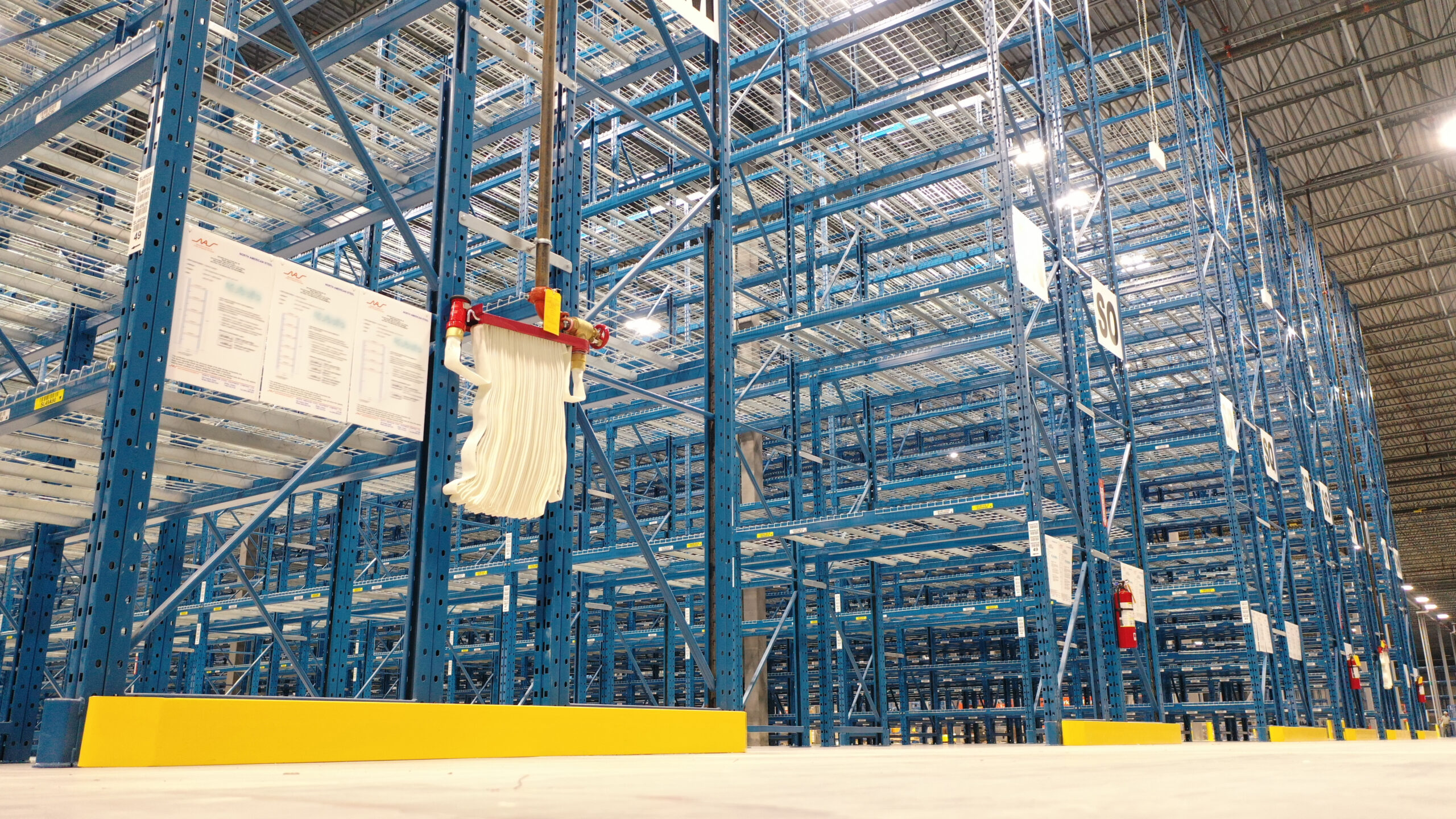
Beam levels should be planned against more than one pallet profile. If today’s dominant load is a 48-inch stacked pallet but the customer base could shift toward taller, lighter freight, the elevation plan should already contemplate that re-slot rather than requiring new beams to accommodate it.
Upright height should be specified above current need where clear height and fire protection allow. Adding a beam level to an upright that already has the height is a morning’s work. Replacing every upright in a bay because the frames were bought exactly to today’s requirement is a project.
Aisle widths should survive an equipment change. A layout built tight to a specific reach truck is a layout that constrains the next fleet decision, and fleet decisions are now being made on shorter cycles too.
Floor loading and anchor patterns should be reviewed with reconfiguration in mind, not just installation. Knowing in advance where the system can and cannot be moved is what makes the difference between a reconfiguration and a replacement.
Standardization is where flexibility lives
The single most underrated flexibility decision is component standardization across the building.
Facilities accumulate racking the way they accumulate everything else, in waves, from different suppliers, over years. The result is a building with four connector types, three upright series and beam lengths that almost but do not quite interchange. Every one of those systems may be individually adjustable. Collectively, they are close to frozen, because nothing can be moved from one area to another without a compatibility check and usually a purchase.
A building standardized on one component family behaves completely differently. Beams pulled from a slow area go into a busy one. A bay converted from selective to a deeper configuration reuses most of its own steel. Reconfiguration stops being a capital request and becomes an operations task, which means it actually happens.
This is worth being deliberate about at the first purchase, because standardization is nearly impossible to impose retroactively.
Reordering belongs in the specification
Standardization only pays off if the components remain available. This is the part of the flexibility conversation that rarely makes it into the specification document, and it deserves to.
The questions are practical. Can the operator order 40 beams and have them in three weeks, or do the economics of the purchase require a full container? Will the same upright series and the same connector be available in two years when a customer changes their pallet profile? Is there an engineer available to review and stamp a reconfiguration, and an inspector who can attend the site rather than rely on a document exchange across time zones?
These are not abstractions. A system that can only be topped up in container quantities is a system that will not be topped up, which means it will not be reconfigured, which means the adjustability described in the catalogue never gets used. The operator ends up working around the racking instead of with it. Imported systems can be excellent steel and still fail this test, simply because the replenishment cycle involves weeks of ocean transit and customs clearance before a single beam can move, and because small orders do not fit the model.
Domestic manufacturing changes that calculus in a mundane but decisive way. Short lead times make small replenishment orders viable. Component continuity means the system bought in 2026 can be matched in 2029. Local engineering means a reconfiguration can be reviewed and approved on a timeline that matches the contract that triggered it. For an operator whose commitments run 90 days, the ability to act inside that window is the whole point.
The second life of a rack system
The last consideration is what happens when a contract moves to a different building, as contracts increasingly do.
A standardized, well-documented system with available components and accessible engineering is worth dismantling and relocating. A mixed system with unavailable parts and no design records usually is not, and it gets left behind or sold at scrap value. Over a 20-year ownership period, the value of the asset’s portability is often greater than the original purchase price difference between options.
None of this argues for spending more on racking. It argues for spending the same money on a system whose flexibility is real rather than theoretical, which is largely a function of how it is specified and how quickly it can be changed.If your contracts are getting shorter while your storage decisions stay long, a design review is the cheapest place to start. Contact North American Steel to arrange a no charge site assessment and a conversation about building storage that can change as fast as your commitments do.




Leave a Reply