Maersk resumes trans-Suez routing on MECL service after successful transits
Share

Share
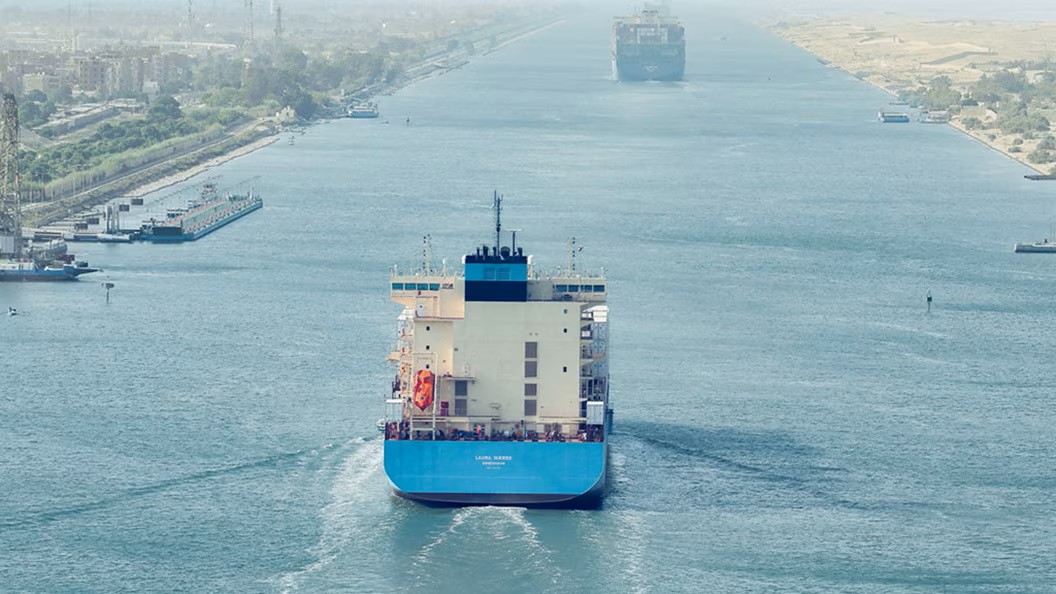
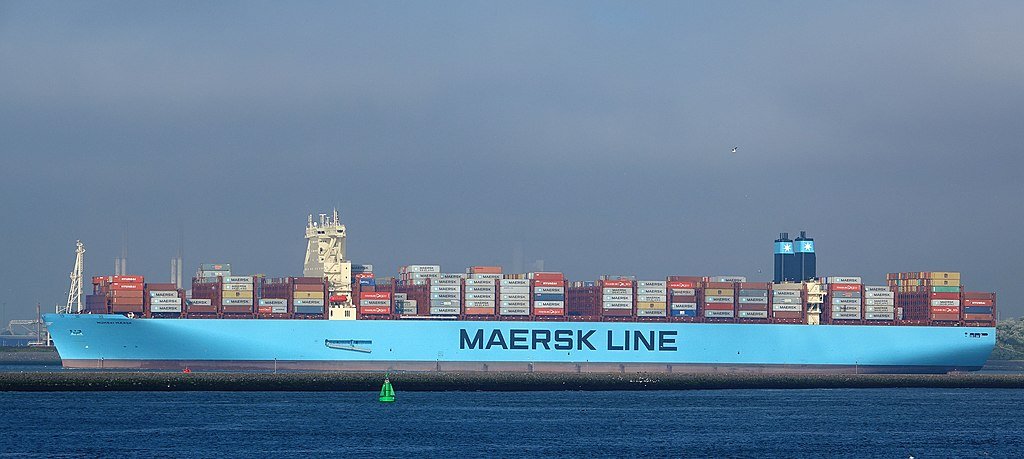
A.P. Moller–Maersk says it will return its Middle East–to–U.S. East Coast MECL service to the trans-Suez route following the successful transits of the Maersk Sebarok and the Maersk Denver.
The move marks the first structural change back to trans-Suez routing since Maersk diverted sailings around the Cape of Good Hope amid security concerns in the region. The MECL service, which is operated solely by Maersk, connects the Middle East and India with the U.S. East Coast and will revert to its original service pattern to deliver shorter and more efficient transit times.
Maersk said the decision remains contingent on continued stability in the Red Sea and the absence of further conflict escalation. The company said it will continue to closely monitor the security situation and has contingency plans in place should conditions deteriorate, including reverting individual sailings or the entire service back to the Cape of Good Hope route.
The company reiterated that the Suez Canal remains its preferred route, calling it a vital maritime corridor and the fastest and most sustainable option for moving cargo between Asia and Europe. Maersk said the return of the MECL service represents a key milestone in its gradual resumption of trans-Suez sailings.
Maersk credited its strategic partnership with the Suez Canal Authority for supporting the planning of the service’s return and said continued collaboration with regional partners will be critical to maintaining safety, predictability and stability for customers.
The first westbound sailing under the revised MECL service will be the Cornelia Maersk on voyage 603W, which departed Jebel Ali Jan. 15. The Maersk Detroit voyage 602E, that departed North Charleston Jan. 10, will be the first eastbound sailing to use the trans-Suez route, with all subsequent sailings following the same routing.


Leave a Reply