Taming inventory chaos for smoother fulfillment flow
Share

Share
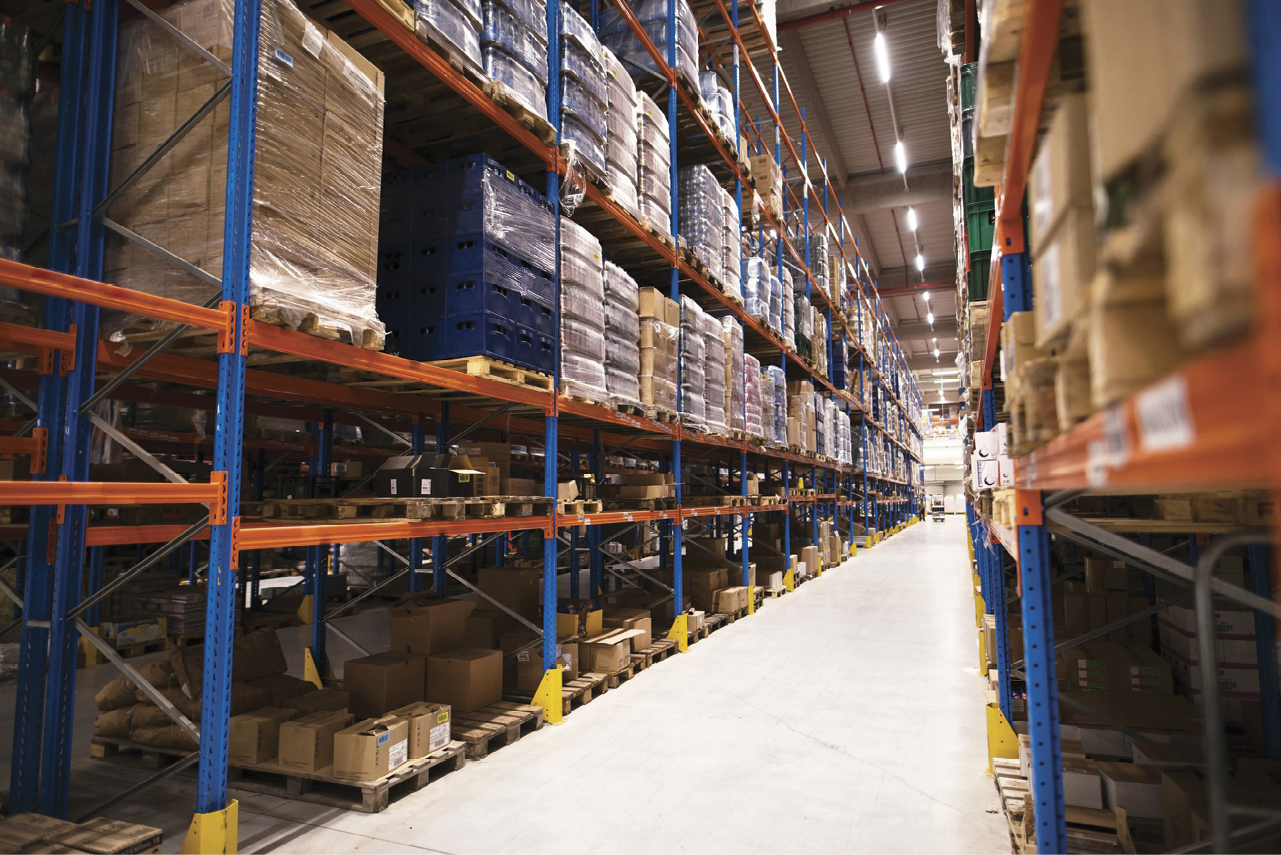
 Today’s supply chains are faster, more complex and less predictable, creating an environment of chaos that is difficult to manage. Orders are late, labour is constrained, inventory is inaccurate, SKUs multiply and customer demands fluctuate. Without clear visibility into inventory, warehouses struggle to meet service-level commitments. Taming this chaos requires better orchestration, powered by real-time decision-making.
But making good decisions requires access to data often locked inside ERP, WMS and TMS systems. Each system operates in silos and cannot see the full picture of the supply chain. The WMS knows where products are stored, the ERP knows what products are coming, and the TMS knows what orders are going out. Between these systems sits a critical gap: the real-time orchestration of inventory and fulfillment. That’s where decisions happen.
Limits of traditional systems
The WMS is the digital backbone of the warehouse. It organizes tasks, manages inventory and ensures compliance with rules. It is excellent at executing tasks, but it struggles in unpredictable environments. A surge in online orders, a late inbound truck or a labour shortage can disrupt operations, and a WMS will not necessarily adapt. Managers often resort to manual processes to adjust schedules and priorities.
As supply chains grow more complex, visibility suffers. Shelves can appear full even when key SKUs are out of stock. Workers may pick from suboptimal locations. Replenishment cycles can become misaligned.
A WMS alone is often insufficient. That is why more companies are turning to decision agents — intelligent tools that work alongside a WMS to bring flexibility and real-time adaptability.
Inventory as a living system
Today’s warehouse operations require something more dynamic than a static record of what’s on hand. Inventory is a living system, constantly changing as products arrive, are processed and ship out.
Decision agents treat inventory as a living system. They know what is happening in the warehouse, not just what was planned yesterday. They continually re-sequence labour, replenishment and dock activity to ensure the right products are shipped at the right time to the correct location.
It is not enough to know that 10 pallets are in the building. Planners need to know which ones will be available for picking in the next hour, which are reserved for another order, and which are still in a trailer waiting to be unloaded. Matching availability with demand separates efficient operations from reactive ones.
Orchestrating the warehouse
Supply chain leaders are turning to decision agents to orchestrate warehouse flows of inventory and fulfillment. Unlike traditional automation, which follows fixed rules, decision agents observe conditions, weigh trade-offs and make recommendations — or even act — in real time.
These AI-powered systems sit on top of existing platforms, ensuring decisions across inventory, labour and fulfillment stay in sync. They operate without constant human intervention, executing tasks based on predefined rules.
A warehouse decision agent analyses WMS data on orders, labour and inventory to orchestrate operations. It reprioritizes tasks in real time to ensure on-time fulfillment and efficient resource use. It also manages stock levels across nodes, triggering procurement or coordinating with manufacturing as needed. Warehouse agents work closely with transportation and demand agents to ensure synchronized execution.
Other functions include:
▶ Replenishment: anticipating which pick faces will run short and triggering pre-emptive moves.
▶ Dock activities: rescheduling trailers when inbound trucks are late, avoiding congestion and idle labour.
▶ Labour management: rebalancing shifts or task assignments as priorities shift throughout the day.
By orchestrating across silos, decision agents align planning and execution, enabling warehouses to adapt instantly to changing conditions.
Focusing on the warehouse decision agent
A warehouse decision agent helps teams run smarter operations with greater adaptability and faster decision-making. It provides:
▶ Clear visibility into who is doing the work, what tasks they should perform, when to start and finish, and where tasks should take place.
▶ Dynamic resequencing, adaptive labour allocation and resilient workflows, so that plans can adjust instantly when a truck is late.
▶ Real-time orchestration of labour, inventory, docks, automation and space to turn chaos into controlled flow.
▶ Balanced workloads, reduced travel waste and fewer bottlenecks, leading to more predictable shifts and on-time finishes.
The payoff: from firefighting to flow
Decision agents do not replace people or existing systems. Instead, they empower workers. By connecting the dots across ERP, WMS and TMS, they eliminate the guesswork that drives inefficiency.
With better visibility and faster decision-making, managers can focus on leading rather than reacting. Workers spend less time waiting and more time performing productive tasks. Customers receive orders faster and more reliably.
The warehouse moves from firefighting mode to a true flow state, where every pallet, person and process stays in sync.





Leave a Reply