Container rates up on Transpacific, down on Asia-Europe route
Share

Share
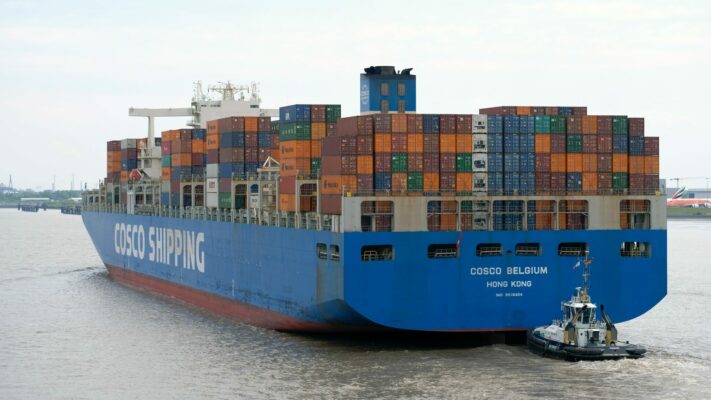
The Drewry World Container Index (WCI) increased one per cent to US$4,339 per 40-ft container for the week of Aug. 10-14, driven by higher rates on the Transpacific trade route.
On the Transpacific trade route, spot rates increased again this week, with rates from Shanghai to New York rising 10 per cent to US$8,706 per 40-ft container and rates from Shanghai to Los Angeles increasing six per cent to US$6,244. Carriers are actively restricting space by utilizing blank sailings. According to Drewry’s Container Capacity Insight, 10 sailings were cancelled in each of the past two weeks, with another seven cancellations planned for next week. Drewry expects freight rates to remain less volatile next week due to tightened capacity.
Additionally, several carriers have announced Panama Canal surcharges on Asia–USEC and Asia–Gulf Coast trade routes effective September.
On the Asia–Europe trade route, spot rates declined this week, with rates from Shanghai to Genoa falling eight per cent to US$5,080 per 40-ft container and from Shanghai to Rotterdam decreasing five per cent to US$4,425. According to Drewry’s Container Capacity Insight, only three blank sailings are announced for next week, the same as the previous week, reflecting constrained capacity. Meanwhile, some carriers have announced new freight-all-kinds (FAK) rates ranging from US$6,700 to US$7,100 per 40-ft container on the Asia–Med trade route, effective Aug. 15, but weakening demand raises questions over the sustainability of these prices. Drewry expects rates to remain stable next week.
The East–West container market remained volatile, with ongoing security concerns in the Suez Canal and Strait of Hormuz, restrictions on Panama Canal transits, congestion at Asian ports following typhoon Dolphin and low-water conditions in the Rhine River impacting inland transportation across Europe. These disruptions continue to affect vessel schedules and supply chain reliability. Carriers are pursuing rates through capacity management and surcharge announcements. Shippers are advised to book early and allow additional lead time to reduce the risk of cargo rollovers and transit delays.



Leave a Reply