Container rates continue to rise, up another nine per cent
Share

Share
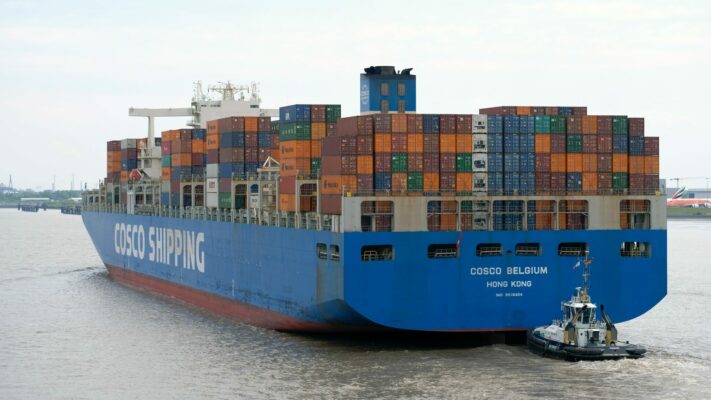
The Drewry World Container Index (WCI) surged nine per cent to US$4,530 per 40-ft container for the week of June 29 to July 3 due to rate increases on the Transpacific and Asia–Europe trade routes.
On the Transpacific trade route, spot rates continued to strengthen, with those on Shanghai to New York rising 11 per cent to US$7,902 per 40-ft container and Shanghai to Los Angeles increasing 10 per cent to US$6,349. According to Drewry’s Container Capacity Insight, eight blank sailings have been announced on the Transpacific trade route for the next week, reflecting tight capacity. Carriers continue to announce general rate increases (GRIs) and peak season surcharges (PSS) for July in anticipation of strong cargo volumes, with HMM introducing a PSS of US$3,000 per 40-ft container effective July 15. Drewry expects rates to rise further in the coming weeks.
On the Asia–Europe trade route, spot rates increased this week as carriers implemented higher freight-all-kinds (FAK) rates and PSS amid strong peak season demand. Freight rates from Shanghai to Genoa rose 10 per cent to US$6,360 per 40-ft container and those from Shanghai to Rotterdam increased seven per cent to US$4,682. According to Drewry’s Container Capacity Insight, only one blank sailing has been announced on the Asia to Europe trade route for the next week, as carriers maintain disciplined capacity management amid strong demand. Drewry expects rates to rise in the coming weeks.
The East-West container freight market has remained resilient this year, supported by early peak season demand and higher shipping costs stemming from geopolitical disruptions. The interim U.S.–Iran agreement has facilitated the reopening of the Strait of Hormuz, with vessel traffic recovering following the evacuation of stranded ships and the designation of authorised transit routes. However, security risks remain elevated after the suspension of ship escort operations following an attack on a containership near Oman. As a result, ongoing geopolitical tensions in the Middle East continue to underpin market uncertainty.


Leave a Reply