Container rates continue to spike
Share

Share
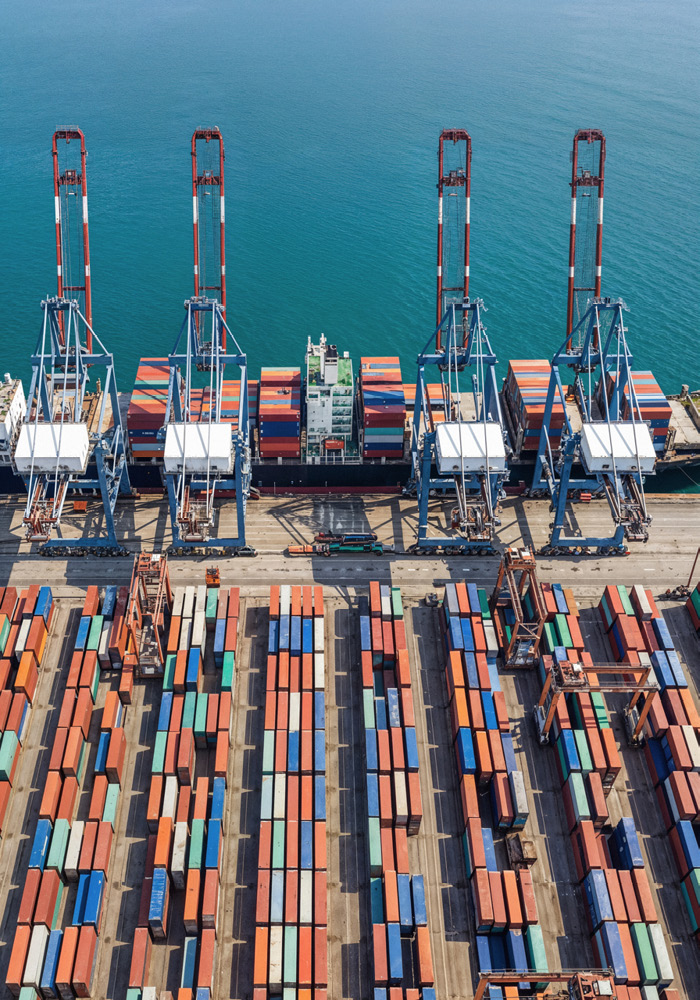
The Drewry World Container Index (WCI) jumped five per cent to US$4,166 per 40-ft container for the week of June 22-26, supported by an increase in rates on the Transpacific trade route. The composite index reached its highest level since September 2024.
On the Transpacific trade route, spot rates continued to strengthen, with those on Shanghai to New York rising six per cent to US$7,149 per 40-ft container and Shanghai to Los Angeles increasing 12 per cent to US$5,750. According to Drewry’s Container Capacity Insight, only four blank sailings have been announced on the Transpacific trade route for the next week, reflecting tight capacity. Transpacific demand remains robust as importers continue frontloading shipments ahead of potential tariff changes and higher bunker-related costs. In addition, general rate increases (GRIs) and peak season surcharges (PSS) are expected to be implemented in July. Therefore, Drewry expects rates to increase further in the coming weeks.
On the Asia–Europe trade route, spot rates were stable this week, with rates on Shanghai to Rotterdam rising one per cent to US$4,392 per 40-ft container, while those on Shanghai to Genoa remained unchanged at US$5,759. According to Drewry’s Container Capacity Insight, only three blank sailings have been announced on the Asia to Europe trade route for the next week, indicating constrained capacity. Carrier pricing remains firm amid continued cargo frontloading ahead of the July 1 bunker fuel adjustment. CMA CGM has announced higher freight-all-kinds (FAK) rates of US$6,300 per 40-ft container from Asia to Europe and US$7,700–US$8,500 from Asia to the Mediterranean. In addition, it has introduced PSS of US$1,000 per 20-ft container on the Asia–Europe trade and US$1,400 per 20-ft container on the Asia–Mediterranean trade, effective July 1. Drewry expects rates to rise in the coming weeks.
The U.S.–Iran ceasefire has eased disruption risks around Strait of Hormuz transits, though conditions remain fragile. At the same time, congestion at key Asian and European hubs continues to limit vessel availability, while strong cargo demand is sustaining tight capacity across major trade lanes.
As a result, carriers are successfully implementing surcharges, including higher FAK levels and PSS, creating upward pressure on spot rates. Shippers are likely to face continued space constraints and should anticipate further short-term volatility in pricing.



Leave a Reply