Canada, U.S. hit pause on tariffs
Share

Share

Canada has secured a short pause on a planned U.S. tariff increase announced this morning, giving negotiators additional time to finalize a trade agreement that both countries say is close to completion.
The United States had been set to impose a 50 per cent tariff on a range of Canadian goods under Section 338 of the U.S. Tariff Act of 1930. Washington has now agreed to delay the measure until the end of day on August 21, 2026, while discussions continue.
In a post published this morning, on Truth Social, U.S. President Donald Trump said: “I have paused the 50% Tariffs against Canada, that were scheduled to kick in tomorrow morning for a three day period, based on the fact that Canada and the U.S.A., subject to the finalization of documents, have a DEAL! The great Keystone XL Pipeline, long ago killed by Sleepy Joe Biden, may be awoken from the grave! Thank you for your attention to this matter. President DONALD J. TRUMP”.
Following the social media post, prime minister Mark Carney provided a statement on the progress and future.
“Over the last number of weeks, Canada has engaged in intensive discussions with the United States to address outstanding trade issues and deliver greater certainty and real benefits for Canadian businesses, workers, farmers, and families.
“Substantial progress has been made, although there is important work still to be done. As this work is ongoing, the United States has agreed to postpone the implementation of its 50% tariff on a range of Canadian goods under Section 338 of the U.S. Tariff Act of 1930 until end of day, August 21.
“While we continue this work, Canada remains focused on building a stronger, more independent, and more competitive economy at home.”
As part of the ongoing negotiations, Canada and the United States have discussed reducing the American auto tariff from 25 per cent to 15 per cent.
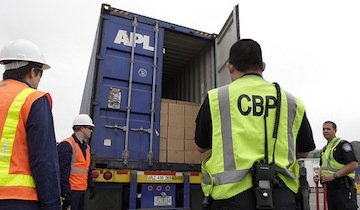
GHY International Inc., a Winnipeg‑based customs brokerage and trade‑services firm, issued an advisory to clients following the tariff announcement. The firm said the three‑day pause gives importers and exporters limited additional time to adjust shipment timing and documentation for goods that may fall under the 50 per cent duty. According to the advisory, companies should continue monitoring U.S. Customs and Border Protection updates and be prepared for potential changes once negotiations conclude.
Existing Section 232 tariffs remain in place, including 50 per cent on steel, 50 per cent on aluminum and 50 per cent on copper, with 25 per cent applied to many derivative metal products and 15 per cent on certain metal‑intensive industrial equipment.
Canadian Manufacturers & Exporters (CME) released a statement as well, responding to the delay. President and CEO Dennis Darby said CME is encouraged by the decision to postpone the tariffs while negotiations continue, but warned that uncertainty remains a major concern for manufacturers.
“The additional time is welcome, but the continued threat of tariffs leaves manufacturers and their workers facing the same damaging uncertainty,” Darby said. “Businesses cannot confidently make long-term decisions about production, hiring, technology adoption and capital investment without knowing the conditions under which they will trade with their largest market. Delay may buy time, but it does not remove the damage caused by uncertainty.”
Darby said integrated North American supply chains support millions of workers and that new tariffs would raise costs and weaken competitiveness.
“This is a moment to lower the temperature, protect what we have built together, and move with purpose toward a durable solution.”
He said that negotiators should use the extension to pursue a comprehensive agreement. “For CME, this means preventing the Section 338 tariffs, addressing existing Section 232 tariffs—particularly those on steel, aluminum, autos and auto parts—and creating a clear path toward a renewed CUSMA and a stable, predictable North American trading relationship.”
Darby said CME will continue working with the federal government. “This extension should not be used as temporary relief – but as another opportunity to secure an outcome that delivers certainty for manufacturers in both countries.”
The temporary hold prevents immediate cost increases for Canadian exporters and avoids short‑term disruption to cross‑border trade flows. Ottawa has not released details on what issues remain outstanding, but officials say the goal is to secure longer‑term stability for producers, manufacturers and cross‑border operators who depend on predictable market conditions.



Leave a Reply