Canadian manufacturing contracts in October as tariffs drive up costs
Share

Share
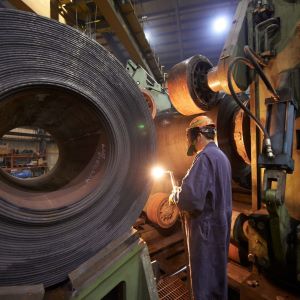
Canada’s manufacturing sector contracted in October for the first time this year as tariffs and geopolitical uncertainty weakened demand, disrupted supply chains and pushed costs to their highest levels in more than four years.
The S&P Global Canada Manufacturing Purchasing Managers’ Index (PMI) fell to 49.6 in October from 51.5 in September, marking its lowest reading since December 2025. A reading below 50 indicates a contraction in manufacturing activity.
Manufacturers reported declines in both production and new orders, with the latter falling at the steepest rate in more than a year. Production declined for the first time since March.
Tariffs were frequently cited as a factor affecting customer demand, particularly in trade with the United States. New export orders declined for the fifth consecutive month, with the latest decrease the sharpest since January.
Supply chain disruptions also intensified, with supplier delivery times deteriorating at the fastest rate since August 2022. Manufacturers attributed delays and product shortages to tariffs and global conflicts, forcing some companies to draw down existing inventories.
“Having enjoyed an uninterrupted run of solid growth throughout 2026 so far, Canada’s manufacturing sector ran out of steam in October, recording a marginal deterioration in operating conditions overall. Against a backdrop of tariffs and ongoing supply-side disruption, firms reported concurrent drops in both output and new orders over the month,” said Paul Smith, economics director at S&P Global Market Intelligence.
Input costs rose at their fastest pace since June 2022, driven by tariffs, higher steel and fuel prices, and increasing freight costs associated with conflict in the Middle East.
Manufacturers responded by raising their selling prices, with output price inflation reaching its highest level in more than four years.
Employment also declined for the first time since March as manufacturers faced reduced workloads and opted not to replace departing employees. Backlogs of work fell for the second consecutive month.
“To add to the broad deterioration in operating conditions, there was also an intensification of price pressures as input costs and output charges both rose at rates not seen for over four years, with inflation underpinned by tariffs, trade disruptions from the Middle East and AI related demand pushing up product prices,” said Smith.
“Given that these price and supply drivers are unlikely to be resolved soon, underwhelming demand and elevated price pressures are set to continue for the foreseeable future. No wonder firms therefore remain subdued in their assessment of the outlook, with confidence again remaining well below trend in October.”
Business confidence remained below historical averages, with manufacturers expressing concerns about the continued impact of tariffs, rising costs and geopolitical uncertainty on future demand.
The survey data were collected between Oct. 9 and 26, 2026.



Leave a Reply