Eight ways to make your workplace safer
Share

Share
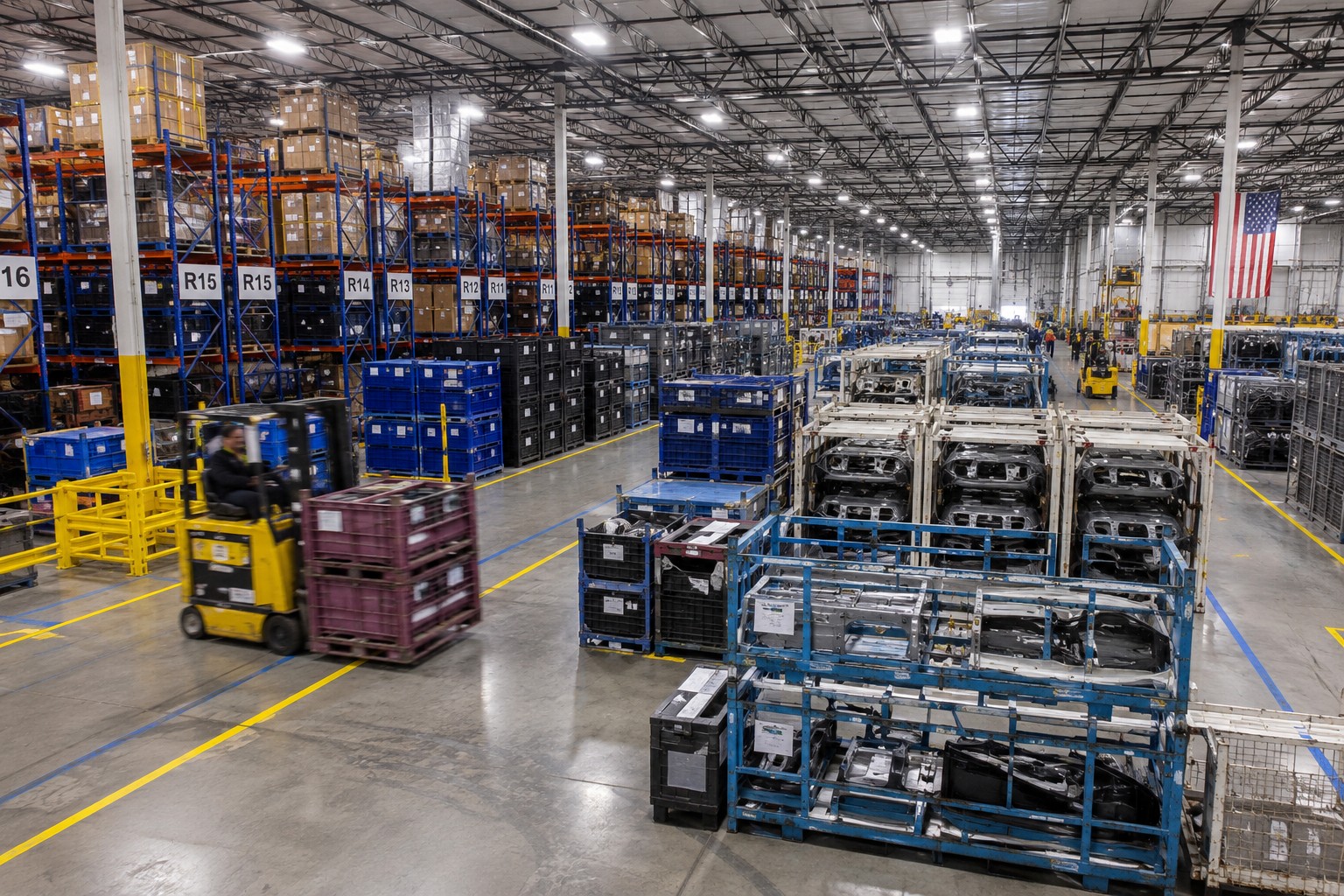
 Being struck by objects or equipment remains one of the top hazards for auto manufacturing workers. Pedestrian contact with mobile equipment, such as lift trucks, is a significant contributor to these types of injuries in warehouses and distribution centres. The first thing employers should do is separate people and mobile equipment as much as possible. The safest thing is to avoid having them interact.
However, if you cannot separate workers and mobile equipment, employers must remember it is their responsibility to set a standard procedure. Based on my experience, common issues that lead to pedestrians contacting mobile equipment are a lack of defined walkways and a lack of “right-of-way” procedures at intersections. Without an established procedure to follow, it is difficult to train workers and ensure everyone knows what is expected.
Blind spots caused by improper storage is another common problem in warehouses. When material is stored in the wrong place, it can create unexpected blind spots. Again, this comes back to having an established procedure. Without a designated storage space and training on how to store material so it is secure, people will find an open space and leave it there.
Are these best practices happening in your workplace?
Prevent workers from getting hit by mobile equipment with these best practices:
1. Establish well-defined pedestrian walkways. Use physical barriers, where possible, to separate pedestrian walkways from mobile equipment so there is no confusion about where workers should walk. Designate drive aisles for mobile equipment. Ensure signage for both are clearly visible.
2. Design and communicate a clear right-of-way procedure. To avoid collisions at intersections, employers should develop a standardized right-of-way procedure, so all workers know what to expect and how to proceed. Use the hierarchy of controls and train workers to implement measures for protection against struck-by hazards.
3. Verify training and certification. Lift truck operators must be competent. If a new employee was trained with a previous employer, be sure to verify their knowledge and training before they operate equipment in your workplace. As a best practice, I recommend refresher training for operators every three years.
4. Provide safety training to pedestrians. Training is not only important for equipment operators. Develop a pedestrian safety program, training and clear signage. Make sure all workers know where it is safe to walk and what are restricted areas.
5. Check functionality of safety features. Lights, beepers and warning alarms all help make workers aware that equipment is moving around them. Check and inspect the functionality of these safety features on a regular basis through preventative maintenance and pre-use inspections to ensure they are in good working order.
6. Set a speed limit and enforce it. Some equipment allows the users to program a speed limit, which prevents users from driving at excessive speeds. It is an effective way to control speed by eliminating the unpredictability of human behaviour.
7. Plan for proper storage. Do not leave workers guessing where material should go. Have a clearly communicated plan and proper racking for storing material. This will help keep pathways clear and visibility good.
8. Investigate near-misses. Even if no one is injured, it is important to analyze a near miss to understand how it occurred. The goal is not to punish. The goal is to prevent it from happening again.
Check out this Safety Connection and video from WSPS for guidance on how to make sure your workers are safe around mobile equipment.




Leave a Reply