Canadian shippers and carriers hail agreement on new bridge at Windsor-Detroit
Share

Share
An agreement has finally been reached to build the new, second bridge linking Windsor, Ont. and Detroit, Mich. The announcement received a “huge thumbs up” from the Canadian Trucking Alliance (CTA).
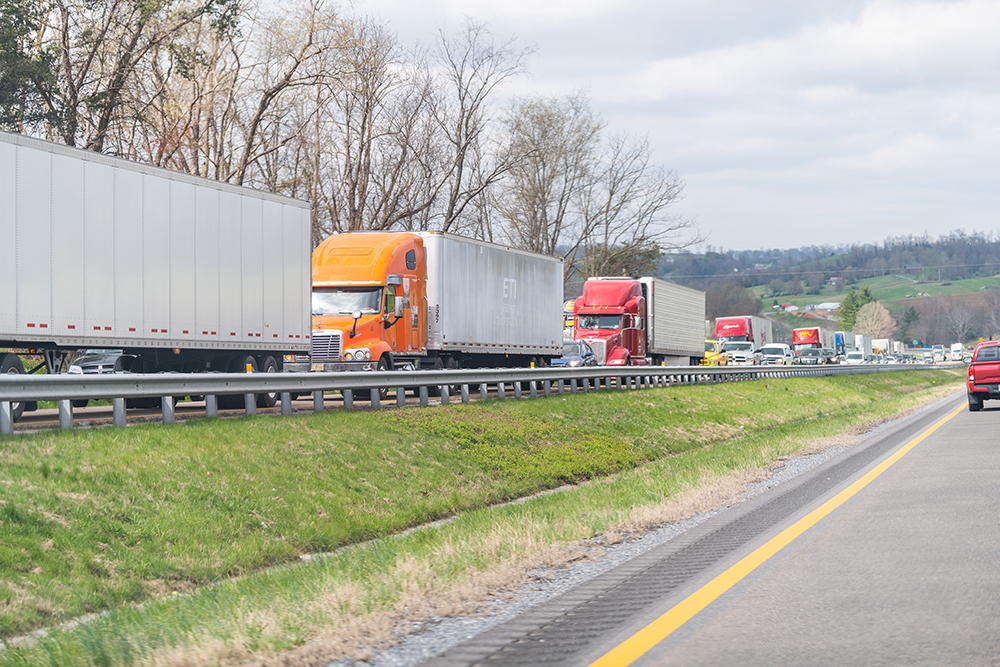
“It’s been a long road to get to this day, with even more stops and starts than on Huron Church Road,” said CTA president David Bradley, referring to the years of political wrangling that has delayed progress on what many say is Canada’s most important and most needed infrastructure investment, and the fact that trucks have to negotiate 16 stop lights on the Windsor road leading to the current bridge crossing. “So, we are thrilled the new crossing will become a reality.”
“When it’s constructed, the new bridge will improve trade flows across the single busiest gateway for trade in North America,” added Bradley, who attended the announcement in Windsor. “It will provide freeway-to-freeway access to the border on both sides, provide redundancy in the event of an emergency shutdown at any of the Windsor-Detroit crossings, and enhance the efficiency and predictability of the North American supply chain, which, in turn, will attract future direct investment and stimulate economic growth in the region.”
He also expects the new bridge will reduce the environmental impacts of long queues at the border.
Shippers also applauded the announcement.
“The delays in reaching this milestone have been frustrating for many sectors of Canadian industry,” said Bob Ballantyne, president of the Canadian Industrial Transportation Association (CITA). Ballantyne believes industry on both sides of the border will see many benefits when the crossing opens and it will have a positive impact on employment far beyond the immediate Windsor-Detroit area.
“A new crossing represents a tremendous opportunity to further strengthen the economies of the US and Canada, the future of our company and many other businesses,” said Sergio Marchionne, chairman and CEO of Chrysler Group. “Undoubtedly, the new crossing will provide a secure, world-class trade and transportation infrastructure for the busiest trade corridor in the United States.”
Chrysler Group moves more than 1,300 component shipments; 2,000 cars and trucks; and makes more than 1,600 Customs entries over this trade corridor. Chrysler’s manufacturing process is integrated throughout all of its North American plants. Ensuring a smooth crossing for both commerce and people is essential to its just in-time manufacturing process. For example, engines made in Trenton or stampings from Warren or Sterling Heights cross the border daily for use at assembly plants in Ontario. Canadian-made vehicles and components also cross the border daily destined for US dealerships or assembly plants. Delays at the border are costly.
Both carriers and shippers commended the public officials – especially Michigan governor Rick Snyder and secretary Ray LaHood, Prime Minister Stephen Harper, and Ontario premier Dalton McGuinty – for their leadership and commitment to the project, which had seen more than its share of political drama.
Canada will pay Michigan’s $550-million share of the bridge – an advance that would later be repaid from toll revenue. Michigan governor Rick Snyder, previously stymied in obtaining approval for the project in the Michigan legislature – even some of the legislators from his own party withheld their support after intense lobbying from the owners of the Ambassador Bridge, which currently enjoys a monopoly – took the bold step of using his executive authority to reach an accord with Canada.
The political agreement to build the bridge and the connecting highways between the federal government, the Government of Ontario (which has responsibility for constructing the highway linkages that are already underway) and the City of Windsor was attained some time ago. The green light from Michigan remained the missing piece of the puzzle.
Bradley acknowledged that opponents who have been battling bridge planners on both sides of the border, such as the owners of the private Ambassador Bridge, are unlikely to give up their fight and could challenge the accord.
“Regardless,” says Bradley, “the hard part of this long, drawn-out episode has been resolved. The need for a new bridge – in terms of both the economic viability and long-term security of both nations – is pretty self-evident. The myriad of problems that truck drivers have experienced in recent years with congestion, delays, and added costs associated with having a single, aging piece of infrastructure at one of the world’s most important trade gateways has led to their solid support of new public-private crossing.”
It’s still unknown exactly when shovels will be ready to hit the ground, but environmental approval to build the bridge across the Detroit River in the Brighton Beach-Delray industrial corridor has already been granted under the lengthy bi-national study process.
According to the Public Border Operators Association (PBOA), the current 83-year-old Ambassador Bridge saw 2.6 million truck crossings last year. About 25% of the goods (valued at about $1.5 billion per day) traded between Canada and the US crosses over the Windsor-Detroit border. Truck traffic is projected to increase 128% over the next 30 years, surpassing current capacity by 2033.




Leave a Reply