
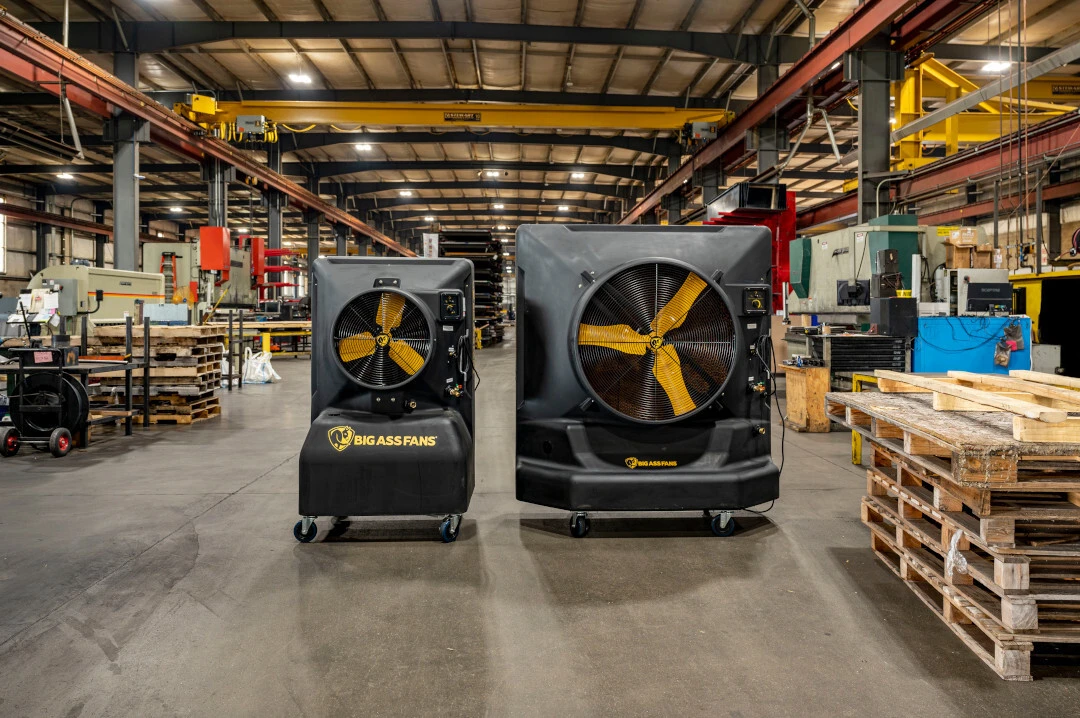
A new study from the University of California Berkeley’s Center for the Built Environment and the University of Sydney found that industrial fans can make unconditioned factory floors feel 10 degrees cooler, offering a practical way to reduce heat stress in manufacturing environments. Researchers monitored 30 workers at two facilities in Baton Rouge, Louisiana, comparing shifts with fans on and off.
According to the study, workers reported conditions similar to working in an environment 10 degrees cooler when fans were running. Seventy‑nine per cent said they felt more effective, and all surveyed workers said fans were important in their workplace.
“Field studies in active manufacturing environments are rare because they’re hard to execute,” said Charlie Huizenga, a founding researcher at the Center for the Built Environment at UC Berkeley. “By monitoring workers under real Louisiana conditions, we found that air movement significantly reduced discomfort and perceived effort.”
Fewer than 20 per cent of U.S. industrial facilities have conditioned air, leaving many workplaces exposed to extreme temperatures that can reduce labour capacity by 30 to 50 per cent during peak heat.
“A single temperature cutoff misses much of what determines whether air movement helps,” said Brian Hilander, VP of engineering and operations at Big Ass Fans. “Humidity and radiant heat shape the result, as does the work being performed.”
The study also contributes to ongoing discussions about fan use in extreme heat. Current CDC guidance advises using fans only below 90°F, while recent WHO guidance recommends fan use up to 104°F. Researchers said humidity, radiant heat and the type of work performed all influence whether air movement helps.
“When work feels harder and employees feel less effective, the entire operation carries that burden,” said Leah Larson, CEO of Big Ass Fans. “This study proves how direct industrial air movement protects worker well-being and productivity on the floor.”







Leave a Reply