Walking the talk
Share

Share
The “green equals green” mantra—that environmentally responsible decisions can save money and therefore improve the value for members—has taken hold at MEC in a big way. In fact, the DC is becoming the nexus of its efforts to clean up its entire supply chain.
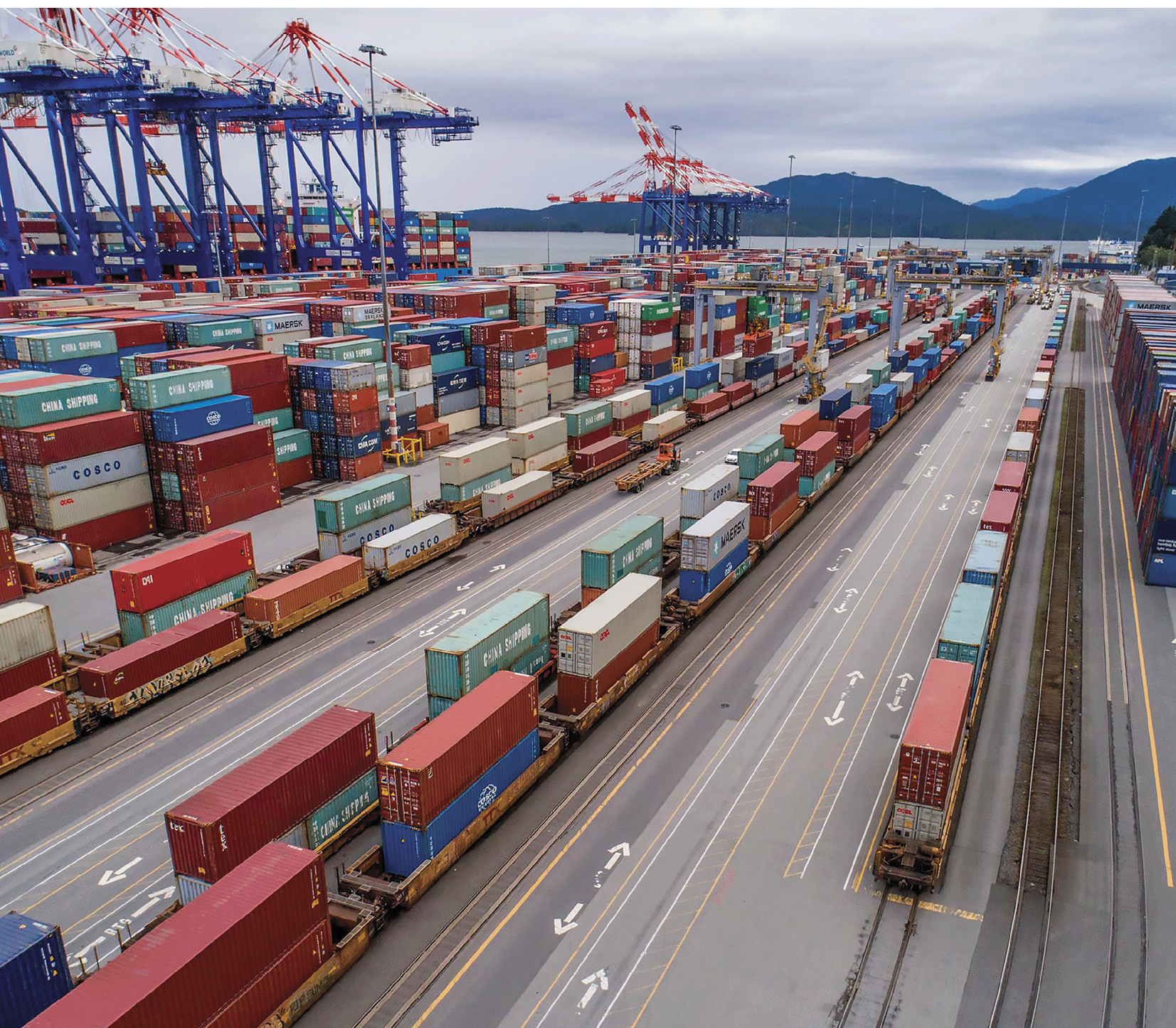
While many companies dealing in apparel choose to ship by air, the co-op moves most of its inbound inventory from Asia by ship. The time differential is small, Fitterer says, and is far outweighed by the benefits. “For us, airfreight is about ten times the cost of a container coming across,” Fitterer says. “And the carbon footprint is atrocious.”
The DC is close to Port Metro Vancouver’s Deltaport at Roberts Bank, so trucks shunting inbound cargo have a relatively short and clear trip in.
On the outbound side, all product currently moves out by truck—although not for long. MEC plans to start shipping to its Ontario and Quebec stores using rail in the near future. It did so in the past, but moved to truck when problems with rail service started causing shipment delays. Today, Fitterer is confident that the rail infrastructure has improved enough to warrant a switch back to the tracks.
The view from the summit
The DC has positioned MEC comfortably for the future. Fitterer says the plan is to add more automation to the facility, possibly in the form of a vertical
carousel to handle bikes and bike parts—a new market the co-op is entering.
A physical expansion will likely occur further down the line. There is room to add up to 80,000sqf to one end of the DC and 100,000sqf to the other, meaning that the space could virtually double.
It’s a safe bet any expansions will stick to the green trend. There’s no good reason not to. The project was expensive—some $42 million for the land, design, construction and equipment—but Fitterer anticipates a quicker-than-expected return on investment. The exact amount of energy saved will be calculated at the end of the first year in December, but all internal measurements point to excellent performance so far.
“It’s never exactly as you’d like to have it, because you’re restricted by regulations. And reusing an existing building, that was a challenge,” Fitterer reasons.
“Our expectations at MEC, especially from our staff and ourselves as management, are high…We didn’t want to just bang up a building carelessly, not caring about the environmental impacts. Our partners had to be willing to take the time to use best practices they’re not normally accustomed to using. When you start getting into green features, it gets you into another level of motivation.”





Leave a Reply